
Do yourself a favor and look up "spineless" in the dictionary. If you need help, it's somewhere between "prostitute" and "travesty." If the definition of the word doesn't perfectly describe senator Max Baucus of Montana, or Jeff Bingaman, or Joe Lieberman, or Evan Bayh, or Harry Reid, I'm not sure what does. These guys are part of a relatively small but powerful group of Democratic lawmakers that's banded together, both officially and in spirit, to stand in the way of a plan that would provide accessible and affordable health care to millions of Americans. It's known as the "public option" -- a provision creating a government-funded health insurer, like Medicare, designed not to replace privately owned health care providers but to augment them and, in essence, compete with them.
The reason these lawmakers aren't giving their full-throated support to this initiative, which is being offered as an alternative to our chronically fucked-up current health care model by President Obama? Because they want to build a bipartisan consensus with their Republican counterparts (who are notoriously loathe to embrace anything they can slap with the term "socialized medicine" and use to cynically gain political leverage). Or at least that's what they say. The real reason, of course, is that they're largely in the pockets of what can only be called the Medical Industrial Complex. The fact is this: Most Americans want the public option. Most Americans believe that quality health care isn't something that should be exclusive to those who can afford it. And yet a plan that would help make that a reality is being hamstrung by those who stand to lose out politically and financially if it passes.
Make no mistake: This is the most important issue facing our country. Period. Health care reform matters more than
anything. It's one of those topics I haven't broached recently, simply because I feel like
Bob Cesca, Lee Stranahan and
Jacki Schechner's excellent and almost non-stop coverage of it has said everything I could possibly say better than I could say it. I highly suggest taking a look at their sites, as well as reading today's
New York Times editorial by Paul Krugman, and see if you can contain your fury at the fact that anyone in this country has the unmitigated balls to put his or her profit above your health.
The only thing I can add to this discussion is a little first hand experience. What follows is a piece I wrote back in late 2007. It deals with the brain surgery I underwent a few years ago and a fellow patient who apparently wasn't as fortunate as I was when it came to our respective insurance situations. The contrast of his ordeal with mine couldn't have been starker. This column was actually picked up and published in an Australian magazine as an example of the inequity of our broken health care system here in the states.
 "Death Be Not Proud (But It is Cost-Effective)" (Originally Published, 12.30.07)
 Even from where I was, in the bed on the opposite side of the room, it was possible to see the gruesome surgical-steel staples bisecting Miguel's head. They ran like a set of corroded train-tracks from ear-to-ear, just beyond the hairline which framed the top of his face.
I'd spent three days trying to figure out exactly what had happened to the man who was my roommate at the Cornell Medical Center Neurosurgical ICU. I watched the nurses run him through the daily regimen of post-op skill tests -- if you consider the ability to open your eyes, follow a finger held in front of your face or correctly state your own name a "skill." Likewise I watched Miguel fail many of these tests over and over again: He could barely keep his right eye open, at one point leading the nurses to get creative and use a piece of surgical tape to secure his open eyelid to his forehead; he never spoke in anything above a barely-audible mumble; his movements were languid and sluggish, as if his bed were sitting at the bottom of an invisible tank of water.
It wasn't until the day that Miguel's children showed up -- when I was forced to sit silently on the other side of the room and watch a tragic bit of theater play out in front of me -- that I finally worked up the courage to ask the nurse just what kind of catastrophe had taken place inside his ruined brain. Watching Miguel interact with his little boy and girl, or at least attempt to, was utterly heartbreaking. He seemed to barely notice they were there -- hardly respond when his wife, a short Hispanic woman who spoke little English and looked like she'd spent the past month sleeping on broken glass, stroked the palm of his hand. The nurses had been kind enough to put a patch over Miguel's dead eye and a Yankees cap on his head in the hope of hiding the most obvious scars of the surgery from his children, but even someone who had never met this man until a few days ago could tell that he was a mere vapor trail of what he had once been. Whoever or whatever had shredded his mind, it had done so with all the subtlety of a sledgehammer. Where Miguel had once lived, there simply wasn't anyone home anymore.
I wasn't even looking at the nurse when she explained Miguel's situation to me; I couldn't pull my eyes away from the sad scene unfolding directly opposite my hospital bed. In hindsight, it was the juxtaposition -- the image of the shadow man across from me set to the weight of the nurse's words -- that left me feeling as if someone had suddenly sucked all the air out of the room.
Miguel, as it turned out, was recovering from surgery to remove a brain tumor -- the exact kind of tumor that had been removed from the same place in my head just three days earlier.
He and I were basically the same person.
And yet there we were: One of us reduced to the mental and motor skills of a child, the other able to watch him intently and try to analyze why.
There was a simple explanation actually as to why I couldn't recognize myself in the mirror of Miguel's one good eye so to speak -- why the layman would never guess that he and I had once shared the same diagnosis. It was because everything that happened
after that point had apparently been drastically different, all of it culminating in two forms of surgery which, despite having the same goal, went about achieving it in ways that were light years apart. The operation that Miguel underwent may as well have been done by Theodoric of York compared to the hyper-advanced microsurgical resection that was performed on me by one of the country's most revered neurosurgeons.
Miguel was left with a massive scar; I had none.
Miguel had been in the hospital for well over a week, and would likely be there much longer; I would spend only five days in the ICU, then be discharged.
Miguel likely had years of mental and physical therapy ahead of him; In spite of a few problematic after-effects and a steady diet of medication that my body and brain would require for some time to come, I'd be back on my feet and feeling relatively normal within weeks. Right now, if I didn't tell you I had undergone surgery just a year-and-a-half ago to remove a tumor the size of a pinball from my brain, you'd probably never guess that anything had happened to me.
Same medical crisis -- completely different outcomes.
And as I sat there just a couple of days after my surgery, staring at Miguel -- at the mess his brain had become and the hardships he was now facing -- I reached one conclusion that seemed to be as obvious as it was offensive.
There but for the grace of my insurance carrier go I.I work for one of the largest media conglomorates in the world. In fact, throughout the length of my career, I've rarely been employed by a company that wasn't wealthy, multi-national and in a position to offer its full-time staff access to the best health care money can buy. Yet something about this fact has always rubbed me the wrong way.
"The best healthcare money can buy."
An ironically sickening reminder that in the early days of 21st century America, there's nothing that's above having a price tag slapped on it -- not even your life.

The parents of 17-year-old Nataline Sarkisyan understand this all too well. On Friday, they laid their daughter to rest in Glendale, California -- one week after her death, which closed a harrowing three-year fight with bone marrow cancer. Hundreds were on-hand for Nataline's memorial service, including a few celebrities who had taken up the cause of saving the young girl during her last days. Their appeals hadn't been directed at God or Mother Nature -- two entities who tend not to listen anyway -- but toward a much more powerful body when it comes to deciding whether a human being lives or dies these days: an HMO, specifically Cigna Corp.
Just before Thanksgiving, Nataline underwent a bone marrow transplant, complications from which caused her liver to fail. Cigna
twice refused to authorize a liver transplant, despite a written appeal from her doctors (the company insisted the procedure was "experimental"); it was only after the case began to receive national attention and young Nataline Sarkisyan's picture began turning up in newspapers directly above captions calling her "the face of a broken health care system" that Cigna capitulated, reconsidering its death sentence. The company's chief medical officer issued the most public statement possible in an attempt to cast damage control as legitimate concern. He said that Cigna -- in a show of strength-through-mercy humorously reminiscent of Amon Goeth's decision to spare one life out of a hundred-thousand in
Schindler's List -- had decided to make an exception for Nataline "given our empathy for the family and the unique circumstances of this situation."
And the angry hordes picketing in front of their Philadelphia headquarters.
"We volunteered to pay for it out of our own pocket. We decided to bear the risk even though we had no obligation to," the good doctor went on to say.
It's a damn shame Al Gore already got that Nobel Peace Prize.
Unfortunately, in one of those unforseeable twists of fate, Cigna's big-hearted largesse came just moments too late. Nataline died a few hours after the decision was made to grant her the liver transplant that would've prolonged her life.
Well, as is repeated so often this time of year, it's the thought that counts.
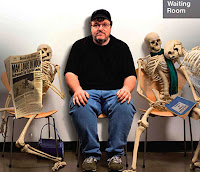
Earlier this year, a lot of unnecessary controversy was generated by muckraking filmmaker Michael Moore's excellent indictment of the American health care system,
Sicko. I say
unnecessary because, despite whatever feelings one may have about Moore or his politics, only the most ruthless capitalist would be unwilling to admit that the way we care for the sick in this country is almost irredeemably screwed up. We've given an entity as unscrupulous and indifferent as the free market control over the single most imperative decision in human existence: literally, whether we live or die. Regardless of what Fox business-creature Neil Cavuto may have to say on the subject, health care and profit are two thoroughly antithetical concepts. Giving CEOs the authority to stand on the edge of the arena and issue a final thumbs-up or down while we lay incapacitated or dying is like charging a lion with protecting the Christians.
The most shocking and infuriating two minutes of
Sicko, and the most effective, as Moore wisely allows the guilty parties to do all the talking for him, provide an irrefutable answer to the question of just how things got this way -- how a system that was once predicated on a commitment to good health care for all Americans became a cynical money-generating engine that's perfectly willing to let people suffer if it means turning a profit. Moore plays part of an audiotaped conversation between Richard Nixon and his flunkiesque Assistant for Domestic Affairs, John Ehrlichman. The conversation is staggering insofar as the complete lack of shame on display (even from two men whose ignominy was already the stuff of legend). Ehrlichman advises Nixon on a plan to overhaul American health care that's being put forth by industrialist Edgar Kaiser, the founder of Kaiser Permanente. Nixon says to Ehrlichman, in classic insufferable, who-gives-a-crap-about-the-little-people fashion, "You know I'm not keen on any of these damn medical programs." Erlichman reassures him by saying the magic words: "This is a private enterprise one. Edgar Kaiser is running his Permanente deal for profit. All incentives are toward less medical care, because the less care they give them the more money they make."
Nixon's reaction?
"Well that appeals to me."
Thus were sown the seeds of the modern HMO; the day after that conversation took place, on February 18th, 1971, Nixon proposed a new National Health Strategy based on managed care from private companies. It worked toward obliterating social medical programs -- because "Socialized Medicine" had long been dirty words, the product of anti-Soviet paranoia -- and masked greed under the guise of providing Americans with the best care money could buy, which was great as long as a patient had the money to afford the best care.
Nataline Sarkisyan's family had health insurance, and maybe that's the most appalling aspect of her story. She never should have died because she was one of the "lucky ones"; the services were in place to save her life. Her parents fully expected that when their child got sick, there would be no questions, no arguments, no delays -- there would just be the care she needed. They lived in the most powerful, wealthy and technologically advanced country in the world after all, and they both had good jobs and did their part to contribute to society. They were living the American dream. They were an integral part of it.
Now they're left demanding answers -- wanting to know why, in this wealthy nation, there was even a question as to whether it was fiscally prudent to save the life of their daughter.
The fact is this: It's
always cheaper to refuse care, and when making money is the motive, believing any consideration other than cost to be paramount isn't just naïve -- it'll get you killed. It's simply never a good idea to trust anyone who stands to profit.
The mammoth company for which I work made sure I had the best possible medical care when I needed it; they paid for it. I never feared coming up with the money to see a doctor which meant that I discovered the tumor in my head before it grew to the size of a golf ball which meant that it could still be removed through a procedure done by only three hospitals in the country.
It's because of all of this that I sit here today able to tell you about it.
I'm not sure Miguel could say the same.
And I doubt his wife and children believe that my life is worth more than his.


.jpg)


