Showing posts with label jayne. Show all posts

Thursday, April 25, 2013

Where Is My Mind?: Seven Years Later


Today marks the seventh anniversary of the event that led to my starting this site.

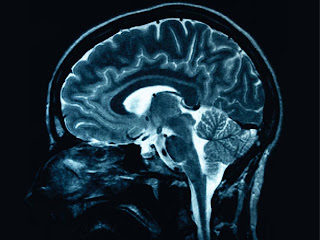
Seven years ago today, I was preparing to enter Cornell Medical Center in New York City to undergo the surgery that would remove a pinball-sized tumor from deep inside my skull. It's indescribably overwhelming to try to mentally sort through the ways in which things have changed for me since that initial diagnosis, that surgery, the early recovery period following the operation; my life, my surroundings, and, most importantly, I myself would feel completely unfamiliar and alien if I tried to compare them against what they all once were.

In the past seven years, I've lost a wife, had a beautiful daughter and then almost immediately lost my future as a full-time father, lost quite a bit of idealism -- an evolved, more tempered version of which has only recently begun to trickle back into the picture -- and lost the person I used to be. On the other hand, I've gained quite a bit of wisdom, a sense of freedom and fearlessness that I could only pretend to have years ago, a new life in a new (old) city, a new relationship with someone I love very much, a new appreciation for what I have and who I am at this stage of my life, and a new kind of quiet contentment in the knowledge that my daughter is growing into a remarkable little girl, whether I'm around to see every second of it or not.

Throughout it all, though, there remains little doubt that the surgery to remove the uninvited guest in my head changed me -- the person I am at my core -- dramatically and fundamentally. I know that my "recovery" from the damage the tumor initially caused and all the brain-scrambling that it left in its wake is far from over and may never be.

As has become a kind of tradition on this day, I'm republishing the two pieces I wrote back in late 2006 which dealt with my surgery. The story -- which is essentially about survival -- admittedly reads like an odd little time capsule given how much of it centers around my love for and devotion to my wife at the time. Those who know the details of what was really going on in our marriage in April of 2006 -- what I knew and the secrets that were being kept from me -- also understand the irony of my professions of trust and loyalty. But that was forever ago and it all hardly matters anymore.

I survived. I'm still here. That's a pretty happy ending, I'd say.


"Where Is My Mind?" (Part One, Originally Published, 10.12.06; Part Two, Originally Published, 12.26.06)


The First Night


"Hi. My name is Piper; I'm going to be your nurse tonight."

The voice seems to come from out of the endless darkness.

"How are you feeling?"

More than hear myself respond, I simply feel the groan bubble up from the back of my throat, creating a harsh tremor; the vibration makes my head pound harder. I'm having trouble keeping my eyes open, so I can barely bring the lithe image into focus as it glides around my bed -- careful to avoid the machines, and the tubes which hook me to them.

Once again the voice comes from nowhere.

"Are you in pain?"

I exhale and somehow manage a feeble word.

"Yes."

"How bad -- on a scale from one to ten?"

I have no idea how to answer that. Much worse than a bad hangover; slightly better than if I'd just been shot in the head storming the beach at Normandy. I'm not quite sure how that translates into a numerical figure.

"Seven," I say.

I open my eyes a little wider and the hazy blur sweeping around me comes into focus. I can still barely make out the features though: Short, young, possibly attractive, long hair; a girl -- the kind I'd rather not have seeing me this way. I'm not sure exactly how I look, but judging by the blasts of crimson on the neck of my gown and the crusted blood on my chin, I doubt I'm ready for the cover of GQ.

For some reason, there's an image in my head I don't understand -- a view of the 59th Street Bridge lit up at night; a view of the FDR running perpendicular to it.

I let my eyelids drift downward and allow the world to go black.

"Okay, I'm going to give you a shot of morphine," comes the voice again.

Everything seems to disappear for a moment; there's silence -- followed by a sudden thrust of liquid fire which consumes my arm from the inside out. I gasp loudly and my body jerks up from the bed, pulling the IV tubes taut. My eyes are open wide. My heart begins racing violently. I can hear the beep of the electronic monitor sounding faster and faster -- keeping time with each pulse of blood through my veins.

"What's happening?" I can barely get the words out.

Piper has her hand on my chest now, trying to push my body back down onto the bed. "You're having a reaction to the morphine. Just give it a minute."

I can't breathe; I'm trying, but I can't.

I look directly at the young nurse's face, which I can still barely make out, despite being just inches from mine. Her head is now nothing more than a black silhouette against what looks like an empty gun-metal sky. Wherever I am, there's very little light. Even with my eyes open, all I see are slightly differing shades of muted grays and blacks -- except for that view.

"Help me," I cough. "Please."

Her hand still pushes gently on my chest, as my heart-rate begins to slow -- the beeping of the monitor subsiding with each pulse. My body relaxes back onto the bed; I take a deep breath. I'm numb. The pain is gone.

"Can I ask you something?" I manage.

"Of course."

"Am I alive?"

The silhouette remains inches away from my face. After a moment, a sliver of gray seems to grow in the center of it; it takes me an eternity to realize that it's a smile.

"Yes, you're alive."

I close my eyes again and fall back into the blackness.


Eight Hours Earlier


My eyes flutter open; the room spins briefly, then comes into a soft focus. I hold my hand up to block out the bright light streaming in through the waiting room windows. Outside, the sun is rising over the East River and New York City is waking to what will surely be a gorgeous day. I unfortunately will be having none of it; my schedule's full for the next several hours.

I stretch slightly -- rolling my shoulders -- and turn my head to the left. The softness of my wife's hair envelops my nose and I breathe deeply, reaching my right hand around her face and running my fingers through the dark brown tousle. I can feel her breath on my arm as her head continues to rest on my shoulder. Across the room, my mother and father sit facing me; they're wearing anxious smiles.

"You were out pretty good there," my father says.

"Yeah, I suppose so."

"Can we get you anything?"

"How about a ride home?"

"Nope. Can't do that, son."

I lift my arm to glance at my watch and it pulls the line on the IV I'm attached to; I'd better get used to this kind of restricted movement. It's just after 10:30am; I've been waiting here along with my parents, my wife and her parents for the past four hours. My surgery was scheduled to begin just before seven. So far the only eventful things that have happened to me since my arrival involve me trading in my clothes for a flimsy hospital gown, getting hooked up to a saline drip and answering some questions about my past drug use. I fail to see how anything I did to destroy my mind and body six years ago has anything to do with why I'm here today. Then again, I was stupid enough to carpet-bomb my bloodstream with an awe-inspiring arsenal of opiates for an extended period of time; I'm obviously not very bright.

My wife nuzzles her head into my neck and turns to look up at me.

"Are you alright?"

I pause for a moment, realizing that I have a responsibility to be steadfast -- strong. "Yeah, I'm okay," I say with an easy smile -- one which I hope distracts from the terror in my eyes.

I'm having a brain tumor removed today.

It's approximately the size of a pinball and has rested itself directly atop my pituitary gland, where it's begun destroying the nerve-center which controls my body's hormone output. My entire physical being has essentially been going haywire since it moved in and decided to do to my head what The Who used to do to their hotel rooms.

I became aware of the unwanted guest in my brain about three weeks ago; that was when the headache began. It was manageable at first -- although unusual because a full-night's sleep did nothing to make it subside. I took Advil. I went to work. I tried to ignore it. And then it got worse -- much worse.

By just after noon, I could barely move; it felt as if someone were hitting me in the face with a sledgehammer each time blood pumped into my brain. I slowly shuffled over to my supervisor's office and explained the situation to him -- that I was in excruciating pain. I told him that I was going home.

The following eighteen hours were indescribable. The headache continued to get worse, no matter how many Advil I took or how much I tried to relax. By the time the sun went down and my bedroom was submerged in darkness, the pain was so bad that it felt like my sinuses were being eaten by bacteria from the inside out. I truly assumed that at some point I would reach up and find a new hole in my face -- the escape route for whatever was devouring my flesh.

I moaned loudly during the night, unable to sleep and instead counting off the hours to sunrise -- when I could drag my racked body into Lower Manhattan to see my doctor. I had convinced myself that a trip to the emergency room for a headache would simply end with a six-hour stay in a busy waiting room; it would do far more harm than good.

As it turned out, my doctor did little to help me; she gave me a prescription for a codeine painkiller and ordered a CT scan for the following day.

When I got back home from her office, I downed six of the pills and drifted off -- the pain ebbing only slightly.

The next day, the suffering continued. The CT scan showed nothing.

It was the day after that -- the fourth day of extraordinary agony -- that I was sent in for an MRI.

It was then that I finally found out what was happening to me.

"Well, I can tell you what's wrong with you," the technician said.

I just stared at him -- my eyes opening and closing in slow-motion. I seemed to be fading in and out of consciousness as my body tried to shut itself down to escape the perpetual torture.

"You've got a brain tumor," he continued. "And it's hemorrhaging into your head."

"Am I going to die?" I asked.

"Probably not. It doesn't look cancerous."

Two hours later, my wife and I were at New York Presbyterian-Cornell Medical Center on the Upper East Side. She was in tears; I was being prepped for surgery. It was only at the last minute that a young doctor in a smart suit pulled aside the curtain to my little room, took a look at my MRI and brought everything to a grinding halt. He said that I was a perfect candidate for a minimally-invasive tumor removal technique which would involve neurosurgeons entering my head through my nose rather than cutting open my skull. He ordered me put on blood-platelets to stop the hemorrhage, Vicodin to kill the pain, and steroids to shrink the tumor as much as possible. He scheduled me for surgery in three weeks.

Today.

Now.

In the far corner of the waiting room there's a young Orthodox Jew and his mother, sitting and filling out paperwork. Moments ago, she was casually brushing off his shoulders as he rocked in his seat -- reading the Torah, probably for the twentieth time this week. He tried to pull away from her, but she refused to relent -- no doubt wanting him to be clean and presentable, should he wind up face to face with Yahweh in a few hours. It was the kind of stereotype which is always associated with New York City, but which is hard to believe actually exists.

My parents and Jayne's parents seem to be enjoying the surreal distraction.

It's then that the doors open, and the nurse walks in and calls my name.

My wife begins to cry as I stand up. My family walks toward me and, one-at-a-time, gives me what I can only hope will not be one last hug. I pull away and shuffle toward the door, my wife holding my hand. She turns my head toward her face a final time and allows me a parting look at her smile -- the view I'll take with me into oblivion. She looks like she's about to collapse, so I put my arms around her, once again pulling the IV line, and hold her tightly.

"I love you. Don't worry. I'll see you in a few hours."

She runs her hand down my face. "Come back to me," she says.

"Always."

I squeeze her hand one last time, wave at my family, and allow the door to the waiting room to close behind me. I follow the nurse down the long hall -- concentrating on the little swishing sounds my hospital-provided footies are making on the tile floor. I try to think of my wife. My heart is beginning to pound. I take deep breaths.

"Don't I get a gurney or something?"

The nurse glances over her shoulder. "No, we need to keep you awake and alert to go over the final paperwork; you need to sign it before we can get underway."

"Lovely," I say. "So I guess a shot of liquid Valium is pretty much out of the question then?"

"We'll get you something as soon as we get you into the O.R."

WE'RE not the ones who are about to have a fucking brain tumor cut out of OUR head, lady.

After a few more steps, we arrive at a set of angry, steel double-doors. Yellow and black stickers warn potential interlopers that they are about to enter an operational neuro-surgical theater, and should proceed with caution. Abandon all hope ye who enter here.

I'm reading the warning when I feel something brush against my arm. I glance down and see a manila file folder open -- several thick sheets of paper visible within.

"I need you to sign where marked please."

The blood in my veins feels as if it's being pumped through a firehose; it's making my whole body shake. I'm terrified beyond words. Without paying any real attention, I numbly sign each slip of paper and hand the folder back to the nurse. She gives me a carefully rehearsed smile and turns to face me completely.

"Ready?"

I say nothing.

With that, she spins briskly around and the steel doors open inward -- revealing a sight which causes me to immediately fight the urge to vomit. I can suddenly hear the blood thrumming in my ears as my heart pumps it at a painful rate. I begin to shake uncontrollably.

The operating theater is massive. It has a high ceiling from which hang rows of halogen spotlights. They augment the long fluorescent bulbs already bathing the entire room in harsh white light. There's movement everywhere; technicians and nurses busy themselves in preparation for the procedure -- adjusting electronic machinery, placing vials of chemicals in rows and lining up trays of scalpels and knives whose blades gleam in the bright light beaming down from above.

I see the computer monitor which will be used to track the progress as the surgeon inserts the camera and micro-instruments up toward my brain. It sits at the head of the room's centerpiece: a large bed, with padded arms that extend outward so that the entire thing resembles a crucifix -- or the bed on which death row inmates are executed by lethal injection.

I'm shaking to the point where it's now visibly noticeable.

"We'll give you something to calm you in just a second," one of the attendants says as he brushes past me.

I'm about to collapse onto the cold floor.

I hear someone ask where my neurosurgeon is; no one seems to know.

I want to close my eyes and disappear.

A nurse seems to appear from out of nowhere on my left and touches my arm. "We need to get you up on the bed; are you ready?"

I don't answer, choosing instead to simply crawl onto the crucifix and lie down on my back like a good little martyr.

"Spread your arms, please," I hear someone ask.

I do as I'm told -- taking a deep breath and somehow pulling a few small words up from deep inside of me.

"Can I please have something to calm me?" I say, barely above a whisper.

A nurse on either side of me grabs one of my arms and straps it down to the furthest end of the transom until both are secure. I can literally hear the sound of each powerful heartbeat.

Someone touches me -- straightening out the fingers of my left hand. "Take a deep breath. This is going to hurt," he says -- and then slides a needle into the soft skin of my wrist. I clench my teeth and muffle a scream. The chaos and movement continue around me, seemingly oblivious to my presence. I just want to vanish from here. I just want to sleep.

I glance over to my left again, and there's a heavy IV line protruding from the needle in my wrist; I can see the shank deep inside my vein. The person who just inserted it seems to be examining his handiwork.

He turns his face toward me.

"I'm going to give you something to relax you -- okay?"

I turn my head away from him and face forward -- toward the ceiling. The brightness from the halogen bulbs burns my eyes; I close them and think of my wife's face. I wish she were here.

I suddenly feel something cold push into my vein, beginning at the wrist and moving quickly up my arm.

I see my wife's face.


The light begins to burn my eyes once again -- only this time my eyes aren't open.


I float for a moment. The chaos and noise around me disappears. There's complete silence.


Everything stops.


I see my wife's face.


Somewhere, the order is given for the Faster-Than-Light jump.


The world goes white in a blinding flash.


I feel the bed shake as it slams through a set of double doors. I'm coughing violently and I can't breathe through my nose. I see my wife's face, only now it's speaking to me.

"You're alright. You made it," it says. "We have to go. They say we can't stay through the night in ICU." I'm not sure who she's talking about. I have no idea where I am. She kisses me and then disappears from sight.

The bed jolts as it hits another set of double doors and enters a darkened room, coming to rest directly in front of a large floor-to-ceiling window. The view beyond is spectacular -- if it's actually real and not simply my imagination. It's a bridge, and a highway with cars streaking along it. The sun has just set, and the skeletal structure of the bridge has come alive with pinpoint lights.

I hear several voices speaking -- the volume of their words rising and falling. I get only bits and pieces.

"...a history of drug use..."

"...successful operation..."

"...should be alright..."

Then there's silence. I'm alone with only the view of the bridge and the highway, the beeping of the machines and an unmistakable song floating through my head. It's Radiohead's Lucky.

An eternity goes by.

I hear someone approach from out of my view -- feel the almost imperceptible changes in the air.

I close my eyes.

The voice seems to come from out of the darkness.

"Hi. My name is Piper. I'm going to be your nurse tonight."


The Next Morning


"Well they encourage your complete cooperation. Send you roses when they think you need to smile. I can't control myself because I don't know how, and they love me for it, honestly, I'll be here for awhile."


I'm counting the holes in the ceiling tiles.

I'm listening to the quiet pulse of the heart monitor.

I'm desperately in need of sleep.

About an hour ago, the heavy bed that's held my racked body since the faster-than-light jump that swept me from the terror of the operating table to the Neurosurgical-ICU was wheeled up to what they call the "secondary" intensive care unit. My picturesque view -- the glowing bridge and highway -- is gone, replaced by an immeasurably less picturesque view of a man named Miguel. My bed has been planted -- monitors and all -- directly across from his so that we now face each other. It should be easy to stare him down should it come to that, being that whatever happened deep in the recesses of Miguel's brain has left him unable to open his right eye. It remains folded shut in an eerie, perpetual wink.

I realize that I've lost count of the holes.

I feel my eyes close and try one more time to drift off to sleep, knowing full-well that it's impossible right now. If the half-dozen tubes restricting my movement weren't enough to prevent me from getting comfortable enough to truly rest, then the hydraulic wraps around my calves which inflate every sixty seconds to push blood through my legs would do the trick nicely. The pressure from the leggings prevents my blood from clotting and me from consequently going into cardiac arrest and dying in this bed -- with Miguel giving me one final devilish wink to send me on my way to oblivion.

I silently wish to be back in the quiet ICU room with the astonishing view. I'm going to be in pain either way; better I be in pain in near-silence.

I don't know at what point it dawned on me exactly what it was that was spread out so beautifully outside of my window -- at what point I regained even a sliver of true lucidity. I now know though that from that room I watched as the darkness enveloped the 59th Street bridge. I watched the headlights of the cars speeding under it along the FDR -- watched them thin as time passed and New York City fell deeper into the night. I counted the minutes until dawn, hoping that at some point sleep would come -- but it never did. Instead I stayed awake throughout the entire night, terrified and alone -- the steely taste of my own blood dripping down from my punctured brain, through the cotton compresses plugged deep into my sinuses, and into my parched mouth.

Every half-hour or so, the young nurse -- Piper -- would enter my room from a door I couldn't see, take my vitals and ask me if I needed anything. I asked for water. I asked for morphine, despite the frightening reaction my body seemed to have to it. At one point she placed a warm blanket over me and I realized that it did nothing to stop my uncontrollable shaking; my entire being seemed to be spasming, and wouldn't stop. I asked her for another blanket -- and another. I was cold. I was shaking and shaking and shaking and nothing would stop it. Nothing. I was scared. I was terrified. I wanted someone to hold my hand. I wanted someone to tell me that everything was going to be alright. I wanted to close my eyes, get up, and slip through that giant window like a ghost and float away into the night -- over the city, to someplace far away. I wanted to fly. I wanted to disappear.

But then there would be the rhythm of the monitor -- the whisper of the leggings inflating. There would be the sudden awareness of the painful needle shanks in my veins and arteries and the taste of the blood and the feel of it on my cracked lips and the fear would return, and I would return to the bed that held me trapped. I'd ask for more water, and more blankets and more morphine. I'd ask Piper to talk to me -- to reassure me. I'd once again be able to make out just the slightest hint of her smile in all that endless darkness -- with just the electric light from outside to bathe the room in a hint of color -- and she'd tell me that I was doing fine.

She'd tell me that the operation was a complete success.

The tumor that had been eating away at my brain was gone.

"How are you feeling?"

A nurse's voice brings me back to this moment. I'm in the secondary ICU. I can't sleep.

"Peachy," I manage -- barely. "I'm tired."

She whisks around my bed and begins checking the readouts on the various machines to which I'm hooked.

"Do you know where you are?" she says as she adjusts my IV.

"Nowhere I want to be," I say, then thinking the better of it -- "Hospital. Cornell Medical Center." Despite the languid ebb and flow of my awareness, I'm cognizant of the fact that this woman deals with enough shit -- figurative and literal -- that antagonizing her is neither fair nor wise. Thankfully, when she comes back into my field of view again, I notice she's smiling slightly.

"Do you know what day it is?" she asks.

I glance slightly to the left of her as she picks up the chart attached to the foot of the bed.

"It's April 28th, 2006."

"Yes it is," she says without looking up from the clipboard.

"I know that because it's written on the rotation board to your right."

She smiles -- checks off points on the chart.

"Very good," she says. "Can you tell me who's president?"

"Fucking idiot," I say, actually managing a hint of a smirk.

"I'll count that as a yes," she responds, placing the clipboard back on the hook at the foot of the bed and -- in the time it takes me to slowly close my eyes and reopen them -- appearing at my bedside.

She shines a bright pen-light into my eyes; it feels like it's burning a hole through to my sore and damaged brain. She clicks it off and I can still see the purple and black sun seared into my retinas. Somewhere behind it she holds up her index finger.

"Follow my finger without moving your head. Eyes only."

I do as I'm told: side to side, up and down.

"You seem to be doing well," she says. "Are you in any pain?"

"Yes."

"How much?"

"My head's pounding." I whisper now. "Needles hurt."

She pushes past another nurse who's come to fill a tiny styrofoam cup on my sliding table with water. Before I can even react, she's pulling the surgical tape from the heavy IV line which was inserted into the tender skin of my left wrist just before the surgery -- before everything went white. I feel the soft hairs being ripped away. All I can manage is a pained whimper.

"Okay, hold on tight," she says. "We're going to pull your A-line. This runs directly into your artery. You shouldn't need it anymore."

I have nothing to hold on to, but I close my eyes tightly and try to will myself away from here. In one sudden motion, I feel the shank deep in my vein slide out and the excruciating pressure from her thumb as it flattens a cotton ball into the open wound. Flashes of color dance behind my eyelids. I exhale stale air through clenched teeth. She wraps new surgical tape around my wrist.

I allow my eyes to relax without opening them, and the strange shapes projected against the inside of my eyelids seem to diffuse, then vanish. I finally fade away.


"So give them blood. Blood. Gallons of the stuff. Give them all that they can drink and it will never be enough. So give them blood. Blood. Blood. Grab a glass because there's going to be a flood."


I feel something gently stroke the inside of my palm -- a light touch. I slowly open my eyes to see a face. It's glowing bright white. As it comes into a wet focus, I realize that it's my wife. The light is coming through the window next to my bed and illuminating her soft features. She smiles.

"Hi, baby," she says. "How are you feeling?"

What begins as a groan evolves into actual words: "Better now." I smile as best I can.

I can see tears beginning to pool in her eyes. I reach up and touch her face; her skin is soft -- even softer than I remember. I look over her shoulder and realize that my mother and father are standing behind her; they're both wearing reassuring smiles. Before I can even find another word, my eyes drift downward. The room blurs. Sound tunnels away. Everything goes black.

The next thing I hear is a voice. It comes from somewhere in a dream.

"Chez," it says. "Chez. You have to wake up."

A slightly darker room than the one I remember emerges from the pitch blackness. To my immediate left, the sun is setting over the East River. My wife is still at my side, but it's the nurse's voice that's dragging me -- kicking and screaming -- back to the waking world.

"I have some bad news," she says. "The doctor wants us to begin taking blood from you every four hours. We need your arm."

Before I'm even awake enough to know what's happening, I feel the latex strap (they asked me if I'm allergic to latex, didn't they?) tighten around my arm; the cold swab of alcohol is rubbed into the crux of my left arm; the needle slips in. I wince -- curse -- awaken fully.

"I have all these tubes in me. There isn't one you can just plug into?" I seethe.

"Well, that's the bad news. We removed your A-line, so that means that we have to find a new vein each time. The rest of your lines are for putting fluids in, not for taking them out."

I turn over slightly, attempting to bury my face in my pillow but unwittingly pulling my IVs taut -- putting me in even more pain.

"You're kidding me," I moan into the pillow.

"I wish I was."

The nurse folds my arm, squeezing a fresh cotton ball into place. "Motherfucker," I whisper. I glance over to see my wife's face; her expression is a concerned pout.

By this time tomorrow, they will have practically run out of places to insert a needle into me. I'll overhear the nurse saying that several of my veins are in danger of collapsing.


Day Four


"A celebrated man amongst the gurneys. They can fix me proper with a bit of luck. The doctors and the nurses they adore me so, but it's really quite alarming 'cause I'm such an awful fuck."


I've devised a plan; I'm going to get out of here.

My arms are bruised black and blue from needle punctures. Last night at around 3am, I was awakened by a large black man with a picnic basket full of test-tubes and needles and the bedside manor of Ed Gein. He attempted to physically roll me over and put a syringe into my arm, but I managed to knock it out of his hand. "I can get security in here if I have to," he said. "You better hope they're armed," I returned with a furious sneer. This exchange was promptly followed by a blackout, which was promptly followed by my coming to just in time to see a nurse inserting something into my IV.

"What is that?"

Before she could even answer, I felt my arm catch on fire -- felt it spread throughout my body. I was being burned alive from the inside out. I opened my mouth in a grisly silent scream. There was molten lava flowing through my veins -- boiling my blood as it consumed me whole.

"Magnesium," I heard her say over the sound of every molecule in my body exploding, one after the other.

Now it's morning again and I'm being allowed to shower for the first time in four days. I'm unhooked from the monitors -- wondering for a moment if the nurse's station will suddenly light up like a pinball machine at word that one of the patients' hearts has apparently stopped cold -- and am marched off to the bathroom, along with my IV stands and catheter. If there's a more pathetic or embarrassing situation short of shitting yourself, I'm unaware of it.

I somehow figure out a way to shower and shave, ridding myself of both the smell of stagnation and the ratty castaway-chic beard I've been cultivating for the past several days, then return to my bed to find one of my nurses -- unfortunately, a young, attractive one -- waiting for me with a forced smile on her face.

"What'd my payment not go through?" I say as I lie back down.

"Nope. Time to take your catheter out."

One of the few true blessings in all of this is the fact that I was knocked out when they inserted both a lumbar puncture into my spine, and a catheter into my penis. For this, I will always be thankful.

"You know, I haven't looked at it once."

"The catheter?"

"Nope. God knows if there's one image I don't want lingering in my brain, it's my shriveled wee-wee with a tube sticking out of it," I say. "Couldn't they have at least sent one of the seventy-year-old nurses to take this thing out? Spare me the embarrassment?"

"Sorry -- I'll have to do," she says with that synthetically sweet smile. She reaches down along the side of my bed as I close my eyes and begin thinking about kittens and butterflies and long, white beaches and star-filled skies and Liverpool's 2005 victory over AC Milan in the Champions League finals and the new Shelby GT and Maria Bello in leather pants in Coyote Ugly and Pearl Jam's cover of the Who's Baba O'Reilly and my wife stepping out of the shower in the morning and any other goddamned thing I can call to mind to distract myself from the twelve inch tube and deflated balloon that's about to be pulled through the end of my dick.

I hear her say the words, "Hang on," then feel razor wire shred my urethra.

My pelvis jolts forward and I muffle a scream which degenerates into a cruel laugh.

"Oh you're fucking evil," I hiss.

"Had to be done," she returns with a look that borders on satisfaction. "Now comes the fun part. If you don't urinate within the next few hours, we have to put the catheter back in." As I furiously try to rub the pain out of my wounded penis, she looks right into my eyes -- no doubt to lend the necessary gravity to her next statement. "That's going to hurt -- a lot."

I reach over and grab a plastic bottle which is now hooked to my bedside, put it under the covers and begin pissing like I've just downed a gallon of iced-tea. It burns like hell.

"I guess that settles that," I say, looking directly at her.


"I gave you blood. Blood. Gallons of the stuff. I gave you all that you could drink and it has never been enough. I gave you blood. Blood. Blood. I'm the kind of human wreckage that you love."


With my shower and shave behind me, I now look presentable for the various doctors who see me intermittently throughout the day and night -- the doctors I'm now trying to actively convince to allow me to leave the hospital so that I might be able to go home and get some real sleep. I've memorized their rounds and make sure that I'm always chipper and alert when they show up at my bedside -- typically in small packs -- to stare in fascination at their prize monkey. In the moments before they make an appearance, I sit up straight, open my laptop and slip in an episode of Firefly on DVD. I smile wide when I see them. I tell them the truth: I feel surprisingly good -- especially for somebody who had brain surgery four days ago.

Across from me, I see the typical lethargic movements of Dead-eye Miguel -- his right eye now held open by a piece of surgical tape which secures his eyelid to his brow. Across the top of his head -- running from ear-to-ear -- is an unbroken line of dull metal staples. Next to him is a newcomer to our little melting pot of brain stew. His name is Mr. Yu. He's a diminutive Asian man who smiles constantly and doesn't speak a word of English. His family tends to visit in groups of seventeen at a time, which means that at least twice a day, the secondary neurosurgical-ICU at Cornell Medical Center is transformed into an episode of MXC, complete with the requisite high-pitched squealing and howls of surreal laughter. All that's missing is a monitor lizard and young girls in bikinis with raw meat taped to their legs.

"You're going home in the morning," Nurse Cockripper says as she suddenly appears at my bedside. "Doctor Schwartz just cleared you. We're moving you to a private room for the night."

"But I'll miss happy fun sexy recovery party!" I say with a deliriously exaggerated smile.

She responds to my obvious sarcasm with a wan smirk and begins unhooking my monitors, eventually leaving only the saline drip which is plugged into my right arm.

"Can I ask you a kind of personal question?" I say as she begins to walk away. She turns around and faces me, putting a hand on her hip like a greasy-spoon waitress who wants to rid herself of a last, loitering customer.

"Sure."

"I couldn't help but overhear you yesterday, talking to the other nurse about some problem you were having with a guy you were dating -- how he didn't understand your job." If there's one thing I have plenty of time to do, it's listen to what's going in the world beyond the partially-drawn curtain that separates my bed from the others. I'm not sure how to specifically ask what I want to ask, so I make a quick decision that I should probably just spit it out. "How can you even look at someone in a sexual way?" I say.

Her face softens. Her posture seems to relax.

"What do you mean?"

"Well," I say, sitting up slightly, "you deal with every type of gruesome bodily function there is. You witness every horrid thing the human body can do -- and you're usually the one called on to clean it up. You stand waist deep in death and decay every day. So, how can you possibly leave this place at the end of each shift, go out on a date, watch somebody take off their clothes and put all of this out of your mind? How can you think of the body as something beautiful -- something you actually desire?"

Her eyes widen slightly. I'm fully aware that the line is at least a good ten to twelve steps behind me. It feels as if all the ambient sound has been sucked out of the room -- the single act of such impertinence creating its own vacuum. She tilts her head slightly -- her hand reaching up to reassuringly touch the ends of the long blond hair which rests gently on her chest. She hesitates, then speaks.

"It's capable of all that awfulness -- it can break down completely -- and then it can heal itself. It's the most incredible machine there is. You don't think that's beautiful?"

Sufficiently put in my place, I smile.

As if on cue, there's the squealing sound of sneakers on tile -- the chaotic tromp of young feet across the hospital floor. I look past the nurse to see two children -- a boy and girl -- plow into the ward with unruly abandon. "Papi! Papi!" they shout as they make a bee-line for Miguel's bed, jumping onto it and wrapping their arms around their father from either side. It's now that I notice that Miguel is wearing a dark, pirate-style patch over his uncooperative right eye and an oversized Yankees hat on his head to cover the grisly row of staples. He moves slowly and carefully -- his reaction to the presence of his children delayed by several seconds. It seems to take an eternity for him to fully comprehend that he's at the center of an epic group bear-hug.

Finally, a weak and sluggish smile spreads across his face. He says something in Spanish. His words are a slurred jumble.

A woman about Miguel's age comes into view and takes her place at his bedside, pulling up a small chair. After a moment, he turns to her -- acknowledging the loving touch she gives his hand.

"What happened to him?" I ask quietly, without taking my gaze away from the strange and heartbreaking sight directly across from my bed.

"He had a tumor in his head," I hear the nurse say. "The same kind you had."

I immediately turn my head and face the young nurse, looking at her with an intensity I wasn't sure I was capable of right now.

She says nothing.

I say nothing.

A few feet away, Miguel's little children laugh for reasons all their own.


The next morning, I'm released from the hospital. I walk through the revolving door and out into a brisk morning in Manhattan. I look up to see the sunlight being split apart by the fresh spring blossoms as they begin to adorn the trees along the street.

I close my eyes and take long deep breaths.

(Lyrics from My Chemical Romance, Blood)

Monday, November 21, 2011

Ballad of Big Nothing


I didn't think of it as stalking; it was just, I don't know, fascination.

When I was a junior in high school I had an unrelenting crush on a freshman. I remember her name, although I won't divulge it. I remember what she looked like: almost supernaturally petite, like some kind of pixie, with hair so blonde it always seemed as if it were being lit from within, skin the color of immaculate alabaster and ice-blue eyes that I was truly convinced had the power to stop time if she willed it. I had a couple of overarching infatuations throughout my high school career -- unrequited interests that threatened to boil over one day then were reduced to a simmer the next -- but this particular girl kept me tightly wound and perfectly transfixed for most of the 11th grade and even into the summer before my senior year. I never spoke to her. Not once. I did, however, drive past her house a couple of times when I happened to be in the area. What I was looking for, what I expected or at the very least hoped to see, I still don't really know. Maybe I imagined that one day I'd find her out in her driveway washing her family's car in a bikini or something -- or maybe I just longed to see her in her natural habitat, as if she were some kind of animal I had decided to study in the interest of science. Maybe it was simply the thrill of knowing that I was in her general presence even if she didn't know it. No, I didn't ever stop the car. No, I didn't sit outside her house. Yes, I did once drive by mildly intoxicated at around midnight, although in my defense I was returning home from a party and her place happened to be on the way.

Yes, it was a creepy little obsession, I guess, and if it had been 2011 rather than 1986 I probably would've gotten myself arrested or at least talked to by a professional should anyone have found out.

I bring this up to make a point: I was always desperate and passionate. I always craved mutual devotion and yearned for storybook romance. I always believed in love and believed that it could last. I don't think I am, I want, I believe any of these things anymore.

I realize that I've made a statement like this before, not long after my initial break-up with Jayne, but what's startling to me now are the ways in which the removal of such a profound and powerful force from my life have affected that life. The ferocious will to be with another human being is the drive that keeps millions of us moving forward, giving our lives weight and our course direction; it's often why we dress the way we do, get the job we have, live where and how we live, surround ourselves with the people and possessions we choose. So many of us are who we are not simply because we want to be the best we can be, but because we pray and expect that the best version of ourselves will translate into a desire by others to be with us. We want to be attractive. We want to be impressive. We want to be loved. But what happens when you take away that compass, do you then drift aimlessly? I can't help but feel as if I've been doing just that.

I'm basically homeless right now and have been since those early days following the split with my wife and my flight from New York City with my daughter two-and-a-half years ago. Because of the present arrangement I have with Jayne regarding Inara, one which remains in place until September of next year, my child is in my custody for weeks and sometimes months at a time, which means that I toggle between being on my own and being with a little girl at regular intervals. When my child is with me, I spend quite a bit of time in Central Florida where my parents live since Inara's grandmother has offered excellent -- and relatively free -- daycare while I've worked both full-time and freelance. When my child isn't with me, I've lived either in a very nice two-bedroom condo in Fort Lauderdale, one owned by an uncle of mine which I pay rent and utilities to stay in part-time, never making fully "mine," or in the guest bedroom of one of my best friends in Miami. The latter situation is amusing for a whole host of reasons, the primary one being that the two of us live like bachelor goof-offs despite having long since passed the stage in our lives where such frivolity was deemed acceptable by just about anybody. Still, in Miami it's common knowledge that you never really have to grow up; the whole place is like Neverland.

The bottom line is that I live out of a suitcase a good portion of the time, going from place to place to place, never truly putting down roots or settling into one specific pattern. I tell myself that the reason for this is that I simply can't at the moment, given the instability inherent in the current situation with Inara and the fact that I'm not working full-time, instead keeping busy with client work from anywhere my laptop happens to be. At least that's what I used to tell myself. More and more I'm willing to admit that I'm in fact lying to myself. I haven't put down roots because I have no desire to. I live out of a suitcase because that's how I choose to live. I don't have a "home" because I don't want one.

This flies in the face of everything I ever wished for or demanded of myself throughout most of my life. It does so because I always wanted to be in a relationship, to be appealing to someone looking not simply for a night or two but for a steady partner. And I don't want any of that anymore. The compass that kept me on one very specific course is gone and the question now becomes how to find your own way without its guidance. For decades my desire to love and be loved was like some elegant Fata Morgana, perpetually seducing me from the horizon but ultimately turning out to be elusive. So maybe I've finally just given up the quest altogether. I have love to give and I give it to my child in abundance, and I've certainly cared about people since my break-up with Jayne, one person in particular who remains very dear to me, but I'm finally coming to terms with the fact that not only have I not fully "healed" in the wake of everything that happened during my marriage to and divorce from Jayne, I'll very likely never again be the person I was before that experience. And I think I'm alright with that.

But those questions remain: Can your own desire for self-betterment be as powerful and have the longevity that an outside, some would say artificial source of improvement did for so long? How do you stop yourself from just dropping out altogether -- from no longer being the least bit concerned with the important things you once did in the hope of appealing to another? How will you know the person you see in the mirror is the real you without someone else there to provide confirmation and affirmation? Who are you if not one-half of a whole?

A couple of years ago I wrote a piece for this site detailing some of the physical changes that happened to me following the surgery I underwent to remove a tumor from my head. I talked about how it altered my hormonal output and, for a time, left me completely uninterested in sex. I talked about how strangely liberating that was; to not worry one bit whether I was clever enough, or funny enough, or cute enough, or rich enough to get laid; to be free of the sexual hang-ups and burdens that have plagued almost every post-pubescent man and woman since the dawn of the civilized age; to not even miss the pursuit of that kind of contact -- or the contact itself -- and the hassles that often come with it. That was just sex. This is love. This is full-time companionship. This is the stuff of songs and sonnets and supposed soulmates. If sex and passion are inspirational in our lives, love is epochal. And while I don't claim to know whether the latter is something I'll purposely avoid, and if so for how long, I know that I'm not looking for it anymore. I don't feel about it the way I once did and so I have to find a new way to feel about it.

In the meantime, I drift -- although I'm not sure it's really drifting. Next month I'll be hitting the road again, traveling across the country and eventually ending up in Los Angeles for a few months. I'm doing it for the reason most people have gone west in the past: opportunity. In this case, work and quite a bit of it. But I'm also going because, as I said the last time I struck out into the empty space, there's therapy in movement, in forward momentum. And because there's wonder and adventure in not knowing exactly what happens next. And because I can.

I have no idea what happened to that little blonde-haired, alabaster-skinned girl with the ice-blue eyes. Wherever she is, I hope she's happy, that she has a good life. I know what became of the impetuous, passionate boy who once thought she was the most beautiful thing he'd ever seen, though. He's gone. But the man who took his place is doing okay.

Tuesday, July 19, 2011

One Ring To Fool Them All


I just found out that the second diamond ring of the three very lovely "engagement" rings that I bought for Jayne during our time together was a fake. The diamond in it wasn't even real.

The thing was completely worthless. I apparently got ripped-off and I gave it to the woman I loved, who likewise got ripped-off -- in more ways than one, I suddenly feel like.

That's just perfect.

Tuesday, June 7, 2011

Tuesday Is Recycling Day


Because it's a slow news day, and because I now spend quite a bit of time playing with Inara in the backyard, under two big trees that remind me a lot of the one I describe here...

"Shade of Gray" (Originally Published, 12.9.08)

When Jayne and I were scouting for a new place to live back in July, we looked at quite a few apartments. Some were very nice -- some, not so much. But what made us settle on the Astoria townhouse we currently call home was its abundance of unusual charms: the high ceilings; the living room which had already been painted a warm and inviting red; the large kitchen; the second bedroom, perfectly suited for a nursery and facing the backyard; the large outdoor deck extending out over the same yard.

The big, beautiful tree in that backyard.

The one that our landlord is having cut down today.

We moved in during the summer, when the tree was lush and full; Inara was captivated by it when we would sit on the deck or in the rocking chair in her small bedroom. I fell in love with that tree; there was honestly nothing more relaxing -- more enchanting -- than sitting underneath it and listening to the wind blow through its leaves, watching its heavy branches sway languidly against the giant sky beyond. It was hypnotic. It was peaceful, in a city that offers very little peace. The tree was like some kind of ancient sentinel, standing watch over Inara's bedroom. Over our home.

And now it's coming down -- piece by piece.

To call it sad wouldn't even scratch the surface.

Apparently, the reason it needs to be destroyed is that our next door neighbors -- a retired NYPD cop and his very sweet, very Irish wife -- are tired of having to rake the stray leaves from it each fall. Why that requires that it be cut down completely is beyond me. Regardless of the reason, killing something that's been a part of this neighborhood longer than any of the parties involved have been alive -- removing something so beautiful from this Earth -- feels wrong. It is wrong.

I'm in no way a nature buff, nor would I call my views on the environment particularly left wing -- sensible, yes, but not left wing. And yet one thing keeps going through my mind as I watch this once majestic thing -- this seemingly invincible being that's seen and withstood so much in its lifetime -- be so casually shredded:

"It's not yours to kill. This tree doesn't belong to you."

As it's almost winter, there are no leaves left on the tree -- they've long since fallen off. Yet even in its skeletal state, the giant is so impressive that as it comes down and barren gray sky replaces the area where it once stood, the kitchen in our apartment -- and of course, the nursery -- becomes brighter and brighter. The shade that Jayne and I cherished so much when we moved here is vanishing before my eyes.

Sad doesn't even scratch the surface.

It's just heartbreaking.

Monday, April 25, 2011

Where Is My Mind?: Five Years Later


Next month marks the fifth birthday of this site.

And today marks the fifth anniversary of the event that led to my starting this site.

Five years ago today, I was preparing to enter Cornell Medical Center in New York City to undergo the surgery which would remove a pinball-sized tumor from deep inside my skull. I can't even begin to fully comprehend all the different ways my life has changed since that initial diagnosis, that surgery, the early recovery period that followed both; it's simply too overwhelming. I lost a career, a wife, had a beautiful child then almost immediately lost a future as a full-time father, lost quite a bit of faith and idealism along the way; but throughout it, I was always in the process of losing something that I'm still to this day trying to come to terms with, the difficulties of which I've documented here many times: I lost myself.

The surgery I underwent changed me dramatically, and while I'm finally about as "balanced" as I'm likely ever going to be and taking care of myself as best as possible, I can never deny that I'm not who I was before the tumor -- in so many ways. I subsist on a steady diet of medication which needs to be adjusted regularly; physically, mentally and emotionally I'm not quite as strong as I once was; I live with the constant concern of the tumor's potential return; I'm pretty sure I've finally fulfilled my destiny and become J. Alfred Prufrock, although how much of that is owed to the tumor and how much can be traced back to, well, everything I'm not quite sure.

As has become a kind of tradition on this day, I'm republishing the two pieces I wrote back in late 2006 which dealt with my surgery. The unfortunate thing is that even this story -- which is essentially about survival -- now reads as painful and bittersweet given how much of it centers around my love for and devotion to my wife at the time, Jayne. I know I've mentioned this more than a few times lately -- and I think it's because I need to accept that after all this time I still haven't fully learned to deal with what happened during our relationship -- but even during this traumatic period in my life, when I desperately needed to lean on her, I had no idea what was going on each and every day when I kissed her goodbye and didn't think to question the life she might be leading in my absence.

Still, I survived relatively intact. Maybe that's the best I could hope for.

I'm alive. It's probably selfish to ask for anything more.


"Where Is My Mind?" (Part One, Originally Published, 10.12.06; Part Two, Originally Published, 12.26.06)


The First Night


"Hi. My name is Piper; I'm going to be your nurse tonight."

The voice seems to come from out of the endless darkness.

"How are you feeling?"

More than hear myself respond, I simply feel the groan bubble up from the back of my throat, creating a harsh tremor; the vibration makes my head pound harder. I'm having trouble keeping my eyes open, so I can barely bring the lithe image into focus as it glides around my bed -- careful to avoid the machines, and the tubes which hook me to them.

Once again the voice comes from nowhere.

"Are you in pain?"

I exhale and somehow manage a feeble word.

"Yes."

"How bad -- on a scale from one to ten?"

I have no idea how to answer that. Much worse than a bad hangover; slightly better than if I'd just been shot in the head storming the beach at Normandy. I'm not quite sure how that translates into a numerical figure.

"Seven," I say.

I open my eyes a little wider and the hazy blur sweeping around me comes into focus. I can still barely make out the features though: Short, young, possibly attractive, long hair; a girl -- the kind I'd rather not have seeing me this way. I'm not sure exactly how I look, but judging by the blasts of crimson on the neck of my gown and the crusted blood on my chin, I doubt I'm ready for the cover of GQ.

For some reason, there's an image in my head I don't understand -- a view of the 59th Street Bridge lit up at night; a view of the FDR running perpendicular to it.

I let my eyelids drift downward and allow the world to go black.

"Okay, I'm going to give you a shot of morphine," comes the voice again.

Everything seems to disappear for a moment; there's silence -- followed by a sudden thrust of liquid fire which consumes my arm from the inside out. I gasp loudly and my body jerks up from the bed, pulling the IV tubes taut. My eyes are open wide. My heart begins racing violently. I can hear the beep of the electronic monitor sounding faster and faster -- keeping time with each pulse of blood through my veins.

"What's happening?" I can barely get the words out.

Piper has her hand on my chest now, trying to push my body back down onto the bed. "You're having a reaction to the morphine. Just give it a minute."

I can't breathe; I'm trying, but I can't.

I look directly at the young nurse's face, which I can still barely make out, despite being just inches from mine. Her head is now nothing more than a black silhouette against what looks like an empty gun-metal sky. Wherever I am, there's very little light. Even with my eyes open, all I see are slightly differing shades of muted grays and blacks -- except for that view.

"Help me," I cough. "Please."

Her hand still pushes gently on my chest, as my heart-rate begins to slow -- the beeping of the monitor subsiding with each pulse. My body relaxes back onto the bed; I take a deep breath. I'm numb. The pain is gone.

"Can I ask you something?" I manage.

"Of course."

"Am I alive?"

The silhouette remains inches away from my face. After a moment, a sliver of gray seems to grow in the center of it; it takes me an eternity to realize that it's a smile.

"Yes, you're alive."

I close my eyes again and fall back into the blackness.


Eight Hours Earlier


My eyes flutter open; the room spins briefly, then comes into a soft focus. I hold my hand up to block out the bright light streaming in through the waiting room windows. Outside, the sun is rising over the East River and New York City is waking to what will surely be a gorgeous day. I unfortunately will be having none of it; my schedule's full for the next several hours.

I stretch slightly -- rolling my shoulders -- and turn my head to the left. The softness of my wife's hair envelops my nose and I breathe deeply, reaching my right hand around her face and running my fingers through the dark brown tousle. I can feel her breath on my arm as her head continues to rest on my shoulder. Across the room, my mother and father sit facing me; they're wearing anxious smiles.

"You were out pretty good there," my father says.

"Yeah, I suppose so."

"Can we get you anything?"

"How about a ride home?"

"Nope. Can't do that, son."

I lift my arm to glance at my watch and it pulls the line on the IV I'm attached to; I'd better get used to this kind of restricted movement. It's just after 10:30am; I've been waiting here along with my parents, my wife and her parents for the past four hours. My surgery was scheduled to begin just before seven. So far the only eventful things that have happened to me since my arrival involve me trading in my clothes for a flimsy hospital gown, getting hooked up to a saline drip and answering some questions about my past drug use. I fail to see how anything I did to destroy my mind and body six years ago has anything to do with why I'm here today. Then again, I was stupid enough to carpet-bomb my bloodstream with an awe-inspiring arsenal of opiates for an extended period of time; I'm obviously not very bright.

My wife nuzzles her head into my neck and turns to look up at me.

"Are you alright?"

I pause for a moment, realizing that I have a responsibility to be steadfast -- strong. "Yeah, I'm okay," I say with an easy smile -- one which I hope distracts from the terror in my eyes.

I'm having a brain tumor removed today.

It's approximately the size of a pinball and has rested itself directly atop my pituitary gland, where it's begun destroying the nerve-center which controls my body's hormone output. My entire physical being has essentially been going haywire since it moved in and decided to do to my head what The Who used to do to their hotel rooms.

I became aware of the unwanted guest in my brain about three weeks ago; that was when the headache began. It was manageable at first -- although unusual because a full-night's sleep did nothing to make it subside. I took Advil. I went to work. I tried to ignore it. And then it got worse -- much worse.

By just after noon, I could barely move; it felt as if someone were hitting me in the face with a sledgehammer each time blood pumped into my brain. I slowly shuffled over to my supervisor's office and explained the situation to him -- that I was in excruciating pain. I told him that I was going home.

The following eighteen hours were indescribable. The headache continued to get worse, no matter how many Advil I took or how much I tried to relax. By the time the sun went down and my bedroom was submerged in darkness, the pain was so bad that it felt like my sinuses were being eaten by bacteria from the inside out. I truly assumed that at some point I would reach up and find a new hole in my face -- the escape route for whatever was devouring my flesh.

I moaned loudly during the night, unable to sleep and instead counting off the hours to sunrise -- when I could drag my racked body into Lower Manhattan to see my doctor. I had convinced myself that a trip to the emergency room for a headache would simply end with a six-hour stay in a busy waiting room; it would do far more harm than good.

As it turned out, my doctor did little to help me; she gave me a prescription for a codeine painkiller and ordered a CT scan for the following day.

When I got back home from her office, I downed six of the pills and drifted off -- the pain ebbing only slightly.

The next day, the suffering continued. The CT scan showed nothing.

It was the day after that -- the fourth day of extraordinary agony -- that I was sent in for an MRI.

It was then that I finally found out what was happening to me.

"Well, I can tell you what's wrong with you," the technician said.

I just stared at him -- my eyes opening and closing in slow-motion. I seemed to be fading in and out of consciousness as my body tried to shut itself down to escape the perpetual torture.

"You've got a brain tumor," he continued. "And it's hemorrhaging into your head."

"Am I going to die?" I asked.

"Probably not. It doesn't look cancerous."

Two hours later, my wife and I were at New York Presbyterian-Cornell Medical Center on the Upper East Side. She was in tears; I was being prepped for surgery. It was only at the last minute that a young doctor in a smart suit pulled aside the curtain to my little room, took a look at my MRI and brought everything to a grinding halt. He said that I was a perfect candidate for a minimally-invasive tumor removal technique which would involve neurosurgeons entering my head through my nose rather than cutting open my skull. He ordered me put on blood-platelets to stop the hemorrhage, Vicodin to kill the pain, and steroids to shrink the tumor as much as possible. He scheduled me for surgery in three weeks.

Today.

Now.

In the far corner of the waiting room there's a young Orthodox Jew and his mother, sitting and filling out paperwork. Moments ago, she was casually brushing off his shoulders as he rocked in his seat -- reading the Torah, probably for the twentieth time this week. He tried to pull away from her, but she refused to relent -- no doubt wanting him to be clean and presentable, should he wind up face to face with Yahweh in a few hours. It was the kind of stereotype which is always associated with New York City, but which is hard to believe actually exists.

My parents and Jayne's parents seem to be enjoying the surreal distraction.

It's then that the doors open, and the nurse walks in and calls my name.

My wife begins to cry as I stand up. My family walks toward me and, one-at-a-time, gives me what I can only hope will not be one last hug. I pull away and shuffle toward the door, my wife holding my hand. She turns my head toward her face a final time and allows me a parting look at her smile -- the view I'll take with me into oblivion. She looks like she's about to collapse, so I put my arms around her, once again pulling the IV line, and hold her tightly.

"I love you. Don't worry. I'll see you in a few hours."

She runs her hand down my face. "Come back to me," she says.

"Always."

I squeeze her hand one last time, wave at my family, and allow the door to the waiting room to close behind me. I follow the nurse down the long hall -- concentrating on the little swishing sounds my hospital-provided footies are making on the tile floor. I try to think of my wife. My heart is beginning to pound. I take deep breaths.

"Don't I get a gurney or something?"

The nurse glances over her shoulder. "No, we need to keep you awake and alert to go over the final paperwork; you need to sign it before we can get underway."

"Lovely," I say. "So I guess a shot of liquid Valium is pretty much out of the question then?"

"We'll get you something as soon as we get you into the O.R."

WE'RE not the ones who are about to have a fucking brain tumor cut out of OUR head, lady.

After a few more steps, we arrive at a set of angry, steel double-doors. Yellow and black stickers warn potential interlopers that they are about to enter an operational neuro-surgical theater, and should proceed with caution. Abandon all hope ye who enter here.

I'm reading the warning when I feel something brush against my arm. I glance down and see a manila file folder open -- several thick sheets of paper visible within.

"I need you to sign where marked please."

The blood in my veins feels as if it's being pumped through a firehose; it's making my whole body shake. I'm terrified beyond words. Without paying any real attention, I numbly sign each slip of paper and hand the folder back to the nurse. She gives me a carefully rehearsed smile and turns to face me completely.

"Ready?"

I say nothing.

With that, she spins briskly around and the steel doors open inward -- revealing a sight which causes me to immediately fight the urge to vomit. I can suddenly hear the blood thrumming in my ears as my heart pumps it at a painful rate. I begin to shake uncontrollably.

The operating theater is massive. It has a high ceiling from which hang rows of halogen spotlights. They augment the long fluorescent bulbs already bathing the entire room in harsh white light. There's movement everywhere; technicians and nurses busy themselves in preparation for the procedure -- adjusting electronic machinery, placing vials of chemicals in rows and lining up trays of scalpels and knives whose blades gleam in the bright light beaming down from above.

I see the computer monitor which will be used to track the progress as the surgeon inserts the camera and micro-instruments up toward my brain. It sits at the head of the room's centerpiece: a large bed, with padded arms that extend outward so that the entire thing resembles a crucifix -- or the bed on which death row inmates are executed by lethal injection.

I'm shaking to the point where it's now visibly noticeable.

"We'll give you something to calm you in just a second," one of the attendants says as he brushes past me.

I'm about to collapse onto the cold floor.

I hear someone ask where my neurosurgeon is; no one seems to know.

I want to close my eyes and disappear.

A nurse seems to appear from out of nowhere on my left and touches my arm. "We need to get you up on the bed; are you ready?"

I don't answer, choosing instead to simply crawl onto the crucifix and lie down on my back like a good little martyr.

"Spread your arms, please," I hear someone ask.

I do as I'm told -- taking a deep breath and somehow pulling a few small words up from deep inside of me.

"Can I please have something to calm me?" I say, barely above a whisper.

A nurse on either side of me grabs one of my arms and straps it down to the furthest end of the transom until both are secure. I can literally hear the sound of each powerful heartbeat.

Someone touches me -- straightening out the fingers of my left hand. "Take a deep breath. This is going to hurt," he says -- and then slides a needle into the soft skin of my wrist. I clench my teeth and muffle a scream. The chaos and movement continue around me, seemingly oblivious to my presence. I just want to vanish from here. I just want to sleep.

I glance over to my left again, and there's a heavy IV line protruding from the needle in my wrist; I can see the shank deep inside my vein. The person who just inserted it seems to be examining his handiwork.

He turns his face toward me.

"I'm going to give you something to relax you -- okay?"

I turn my head away from him and face forward -- toward the ceiling. The brightness from the halogen bulbs burns my eyes; I close them and think of my wife's face. I wish she were here.

I suddenly feel something cold push into my vein, beginning at the wrist and moving quickly up my arm.

I see my wife's face.


The light begins to burn my eyes once again -- only this time my eyes aren't open.


I float for a moment. The chaos and noise around me disappears. There's complete silence.


Everything stops.


I see my wife's face.


Somewhere, the order is given for the Faster-Than-Light jump.


The world goes white in a blinding flash.


I feel the bed shake as it slams through a set of double doors. I'm coughing violently and I can't breathe through my nose. I see my wife's face, only now it's speaking to me.

"You're alright. You made it," it says. "We have to go. They say we can't stay through the night in ICU." I'm not sure who she's talking about. I have no idea where I am. She kisses me and then disappears from sight.

The bed jolts as it hits another set of double doors and enters a darkened room, coming to rest directly in front of a large floor-to-ceiling window. The view beyond is spectacular -- if it's actually real and not simply my imagination. It's a bridge, and a highway with cars streaking along it. The sun has just set, and the skeletal structure of the bridge has come alive with pinpoint lights.

I hear several voices speaking -- the volume of their words rising and falling. I get only bits and pieces.

"...a history of drug use..."

"...successful operation..."

"...should be alright..."

Then there's silence. I'm alone with only the view of the bridge and the highway, the beeping of the machines and an unmistakable song floating through my head. It's Radiohead's Lucky.

An eternity goes by.

I hear someone approach from out of my view -- feel the almost imperceptible changes in the air.

I close my eyes.

The voice seems to come from out of the darkness.

"Hi. My name is Piper. I'm going to be your nurse tonight."


The Next Morning


"Well they encourage your complete cooperation. Send you roses when they think you need to smile. I can't control myself because I don't know how, and they love me for it, honestly, I'll be here for awhile."


I'm counting the holes in the ceiling tiles.

I'm listening to the quiet pulse of the heart monitor.

I'm desperately in need of sleep.

About an hour ago, the heavy bed that's held my racked body since the faster-than-light jump that swept me from the terror of the operating table to the Neurosurgical-ICU was wheeled up to what they call the "secondary" intensive care unit. My picturesque view -- the glowing bridge and highway -- is gone, replaced by an immeasurably less picturesque view of a man named Miguel. My bed has been planted -- monitors and all -- directly across from his so that we now face each other. It should be easy to stare him down should it come to that, being that whatever happened deep in the recesses of Miguel's brain has left him unable to open his right eye. It remains folded shut in an eerie, perpetual wink.

I realize that I've lost count of the holes.

I feel my eyes close and try one more time to drift off to sleep, knowing full-well that it's impossible right now. If the half-dozen tubes restricting my movement weren't enough to prevent me from getting comfortable enough to truly rest, then the hydraulic wraps around my calves which inflate every sixty seconds to push blood through my legs would do the trick nicely. The pressure from the leggings prevents my blood from clotting and me from consequently going into cardiac arrest and dying in this bed -- with Miguel giving me one final devilish wink to send me on my way to oblivion.

I silently wish to be back in the quiet ICU room with the astonishing view. I'm going to be in pain either way; better I be in pain in near-silence.

I don't know at what point it dawned on me exactly what it was that was spread out so beautifully outside of my window -- at what point I regained even a sliver of true lucidity. I now know though that from that room I watched as the darkness enveloped the 59th Street bridge. I watched the headlights of the cars speeding under it along the FDR -- watched them thin as time passed and New York City fell deeper into the night. I counted the minutes until dawn, hoping that at some point sleep would come -- but it never did. Instead I stayed awake throughout the entire night, terrified and alone -- the steely taste of my own blood dripping down from my punctured brain, through the cotton compresses plugged deep into my sinuses, and into my parched mouth.

Every half-hour or so, the young nurse -- Piper -- would enter my room from a door I couldn't see, take my vitals and ask me if I needed anything. I asked for water. I asked for morphine, despite the frightening reaction my body seemed to have to it. At one point she placed a warm blanket over me and I realized that it did nothing to stop my uncontrollable shaking; my entire being seemed to be spasming, and wouldn't stop. I asked her for another blanket -- and another. I was cold. I was shaking and shaking and shaking and nothing would stop it. Nothing. I was scared. I was terrified. I wanted someone to hold my hand. I wanted someone to tell me that everything was going to be alright. I wanted to close my eyes, get up, and slip through that giant window like a ghost and float away into the night -- over the city, to someplace far away. I wanted to fly. I wanted to disappear.

But then there would be the rhythm of the monitor -- the whisper of the leggings inflating. There would be the sudden awareness of the painful needle shanks in my veins and arteries and the taste of the blood and the feel of it on my cracked lips and the fear would return, and I would return to the bed that held me trapped. I'd ask for more water, and more blankets and more morphine. I'd ask Piper to talk to me -- to reassure me. I'd once again be able to make out just the slightest hint of her smile in all that endless darkness -- with just the electric light from outside to bathe the room in a hint of color -- and she'd tell me that I was doing fine.

She'd tell me that the operation was a complete success.

The tumor that had been eating away at my brain was gone.

"How are you feeling?"

A nurse's voice brings me back to this moment. I'm in the secondary ICU. I can't sleep.

"Peachy," I manage -- barely. "I'm tired."

She whisks around my bed and begins checking the readouts on the various machines to which I'm hooked.

"Do you know where you are?" she says as she adjusts my IV.

"Nowhere I want to be," I say, then thinking the better of it -- "Hospital. Cornell Medical Center." Despite the languid ebb and flow of my awareness, I'm cognizant of the fact that this woman deals with enough shit -- figurative and literal -- that antagonizing her is neither fair nor wise. Thankfully, when she comes back into my field of view again, I notice she's smiling slightly.

"Do you know what day it is?" she asks.

I glance slightly to the left of her as she picks up the chart attached to the foot of the bed.

"It's April 28th, 2006."

"Yes it is," she says without looking up from the clipboard.

"I know that because it's written on the rotation board to your right."

She smiles -- checks off points on the chart.

"Very good," she says. "Can you tell me who's president?"

"Fucking idiot," I say, actually managing a hint of a smirk.

"I'll count that as a yes," she responds, placing the clipboard back on the hook at the foot of the bed and -- in the time it takes me to slowly close my eyes and reopen them -- appearing at my bedside.

She shines a bright pen-light into my eyes; it feels like it's burning a hole through to my sore and damaged brain. She clicks it off and I can still see the purple and black sun seared into my retinas. Somewhere behind it she holds up her index finger.

"Follow my finger without moving your head. Eyes only."

I do as I'm told: side to side, up and down.

"You seem to be doing well," she says. "Are you in any pain?"

"Yes."

"How much?"

"My head's pounding." I whisper now. "Needles hurt."

She pushes past another nurse who's come to fill a tiny styrofoam cup on my sliding table with water. Before I can even react, she's pulling the surgical tape from the heavy IV line which was inserted into the tender skin of my left wrist just before the surgery -- before everything went white. I feel the soft hairs being ripped away. All I can manage is a pained whimper.

"Okay, hold on tight," she says. "We're going to pull your A-line. This runs directly into your artery. You shouldn't need it anymore."

I have nothing to hold on to, but I close my eyes tightly and try to will myself away from here. In one sudden motion, I feel the shank deep in my vein slide out and the excruciating pressure from her thumb as it flattens a cotton ball into the open wound. Flashes of color dance behind my eyelids. I exhale stale air through clenched teeth. She wraps new surgical tape around my wrist.

I allow my eyes to relax without opening them, and the strange shapes projected against the inside of my eyelids seem to diffuse, then vanish. I finally fade away.


"So give them blood. Blood. Gallons of the stuff. Give them all that they can drink and it will never be enough. So give them blood. Blood. Blood. Grab a glass because there's going to be a flood."


I feel something gently stroke the inside of my palm -- a light touch. I slowly open my eyes to see a face. It's glowing bright white. As it comes into a wet focus, I realize that it's my wife. The light is coming through the window next to my bed and illuminating her soft features. She smiles.

"Hi, baby," she says. "How are you feeling?"

What begins as a groan evolves into actual words: "Better now." I smile as best I can.

I can see tears beginning to pool in her eyes. I reach up and touch her face; her skin is soft -- even softer than I remember. I look over her shoulder and realize that my mother and father are standing behind her; they're both wearing reassuring smiles. Before I can even find another word, my eyes drift downward. The room blurs. Sound tunnels away. Everything goes black.

The next thing I hear is a voice. It comes from somewhere in a dream.

"Chez," it says. "Chez. You have to wake up."

A slightly darker room than the one I remember emerges from the pitch blackness. To my immediate left, the sun is setting over the East River. My wife is still at my side, but it's the nurse's voice that's dragging me -- kicking and screaming -- back to the waking world.

"I have some bad news," she says. "The doctor wants us to begin taking blood from you every four hours. We need your arm."

Before I'm even awake enough to know what's happening, I feel the latex strap (they asked me if I'm allergic to latex, didn't they?) tighten around my arm; the cold swab of alcohol is rubbed into the crux of my left arm; the needle slips in. I wince -- curse -- awaken fully.

"I have all these tubes in me. There isn't one you can just plug into?" I seethe.

"Well, that's the bad news. We removed your A-line, so that means that we have to find a new vein each time. The rest of your lines are for putting fluids in, not for taking them out."

I turn over slightly, attempting to bury my face in my pillow but unwittingly pulling my IVs taut -- putting me in even more pain.

"You're kidding me," I moan into the pillow.

"I wish I was."

The nurse folds my arm, squeezing a fresh cotton ball into place. "Motherfucker," I whisper. I glance over to see my wife's face; her expression is a concerned pout.

By this time tomorrow, they will have practically run out of places to insert a needle into me. I'll overhear the nurse saying that several of my veins are in danger of collapsing.


Day Four


"A celebrated man amongst the gurneys. They can fix me proper with a bit of luck. The doctors and the nurses they adore me so, but it's really quite alarming 'cause I'm such an awful fuck."


I've devised a plan; I'm going to get out of here.

My arms are bruised black and blue from needle punctures. Last night at around 3am, I was awakened by a large black man with a picnic basket full of test-tubes and needles and the bedside manor of Ed Gein. He attempted to physically roll me over and put a syringe into my arm, but I managed to knock it out of his hand. "I can get security in here if I have to," he said. "You better hope they're armed," I returned with a furious sneer. This exchange was promptly followed by a blackout, which was promptly followed by my coming to just in time to see a nurse inserting something into my IV.

"What is that?"

Before she could even answer, I felt my arm catch on fire -- felt it spread throughout my body. I was being burned alive from the inside out. I opened my mouth in a grisly silent scream. There was molten lava flowing through my veins -- boiling my blood as it consumed me whole.

"Magnesium," I heard her say over the sound of every molecule in my body exploding, one after the other.

Now it's morning again and I'm being allowed to shower for the first time in four days. I'm unhooked from the monitors -- wondering for a moment if the nurse's station will suddenly light up like a pinball machine at word that one of the patients' hearts has apparently stopped cold -- and am marched off to the bathroom, along with my IV stands and catheter. If there's a more pathetic or embarrassing situation short of shitting yourself, I'm unaware of it.

I somehow figure out a way to shower and shave, ridding myself of both the smell of stagnation and the ratty castaway-chic beard I've been cultivating for the past several days, then return to my bed to find one of my nurses -- unfortunately, a young, attractive one -- waiting for me with a forced smile on her face.

"What'd my payment not go through?" I say as I lie back down.

"Nope. Time to take your catheter out."

One of the few true blessings in all of this is the fact that I was knocked out when they inserted both a lumbar puncture into my spine, and a catheter into my penis. For this, I will always be thankful.

"You know, I haven't looked at it once."

"The catheter?"

"Nope. God knows if there's one image I don't want lingering in my brain, it's my shriveled wee-wee with a tube sticking out of it," I say. "Couldn't they have at least sent one of the seventy-year-old nurses to take this thing out? Spare me the embarrassment?"

"Sorry -- I'll have to do," she says with that synthetically sweet smile. She reaches down along the side of my bed as I close my eyes and begin thinking about kittens and butterflies and long, white beaches and star-filled skies and Liverpool's 2005 victory over AC Milan in the Champions League finals and the new Shelby GT and Maria Bello in leather pants in Coyote Ugly and Pearl Jam's cover of the Who's Baba O'Reilly and my wife stepping out of the shower in the morning and any other goddamned thing I can call to mind to distract myself from the twelve inch tube and deflated balloon that's about to be pulled through the end of my dick.

I hear her say the words, "Hang on," then feel razor wire shred my urethra.

My pelvis jolts forward and I muffle a scream which degenerates into a cruel laugh.

"Oh you're fucking evil," I hiss.

"Had to be done," she returns with a look that borders on satisfaction. "Now comes the fun part. If you don't urinate within the next few hours, we have to put the catheter back in." As I furiously try to rub the pain out of my wounded penis, she looks right into my eyes -- no doubt to lend the necessary gravity to her next statement. "That's going to hurt -- a lot."

I reach over and grab a plastic bottle which is now hooked to my bedside, put it under the covers and begin pissing like I've just downed a gallon of iced-tea. It burns like hell.

"I guess that settles that," I say, looking directly at her.


"I gave you blood. Blood. Gallons of the stuff. I gave you all that you could drink and it has never been enough. I gave you blood. Blood. Blood. I'm the kind of human wreckage that you love."


With my shower and shave behind me, I now look presentable for the various doctors who see me intermittently throughout the day and night -- the doctors I'm now trying to actively convince to allow me to leave the hospital so that I might be able to go home and get some real sleep. I've memorized their rounds and make sure that I'm always chipper and alert when they show up at my bedside -- typically in small packs -- to stare in fascination at their prize monkey. In the moments before they make an appearance, I sit up straight, open my laptop and slip in an episode of Firefly on DVD. I smile wide when I see them. I tell them the truth: I feel surprisingly good -- especially for somebody who had brain surgery four days ago.

Across from me, I see the typical lethargic movements of Dead-eye Miguel -- his right eye now held open by a piece of surgical tape which secures his eyelid to his brow. Across the top of his head -- running from ear-to-ear -- is an unbroken line of dull metal staples. Next to him is a newcomer to our little melting pot of brain stew. His name is Mr. Yu. He's a diminutive Asian man who smiles constantly and doesn't speak a word of English. His family tends to visit in groups of seventeen at a time, which means that at least twice a day, the secondary neurosurgical-ICU at Cornell Medical Center is transformed into an episode of MXC, complete with the requisite high-pitched squealing and howls of surreal laughter. All that's missing is a monitor lizard and young girls in bikinis with raw meat taped to their legs.

"You're going home in the morning," Nurse Cockripper says as she suddenly appears at my bedside. "Doctor Schwartz just cleared you. We're moving you to a private room for the night."

"But I'll miss happy fun sexy recovery party!" I say with a deliriously exaggerated smile.

She responds to my obvious sarcasm with a wan smirk and begins unhooking my monitors, eventually leaving only the saline drip which is plugged into my right arm.

"Can I ask you a kind of personal question?" I say as she begins to walk away. She turns around and faces me, putting a hand on her hip like a greasy-spoon waitress who wants to rid herself of a last, loitering customer.

"Sure."

"I couldn't help but overhear you yesterday, talking to the other nurse about some problem you were having with a guy you were dating -- how he didn't understand your job." If there's one thing I have plenty of time to do, it's listen to what's going in the world beyond the partially-drawn curtain that separates my bed from the others. I'm not sure how to specifically ask what I want to ask, so I make a quick decision that I should probably just spit it out. "How can you even look at someone in a sexual way?" I say.

Her face softens. Her posture seems to relax.

"What do you mean?"

"Well," I say, sitting up slightly, "you deal with every type of gruesome bodily function there is. You witness every horrid thing the human body can do -- and you're usually the one called on to clean it up. You stand waist deep in death and decay every day. So, how can you possibly leave this place at the end of each shift, go out on a date, watch somebody take off their clothes and put all of this out of your mind? How can you think of the body as something beautiful -- something you actually desire?"

Her eyes widen slightly. I'm fully aware that the line is at least a good ten to twelve steps behind me. It feels as if all the ambient sound has been sucked out of the room -- the single act of such impertinence creating its own vacuum. She tilts her head slightly -- her hand reaching up to reassuringly touch the ends of the long blond hair which rests gently on her chest. She hesitates, then speaks.

"It's capable of all that awfulness -- it can break down completely -- and then it can heal itself. It's the most incredible machine there is. You don't think that's beautiful?"

Sufficiently put in my place, I smile.

As if on cue, there's the squealing sound of sneakers on tile -- the chaotic tromp of young feet across the hospital floor. I look past the nurse to see two children -- a boy and girl -- plow into the ward with unruly abandon. "Papi! Papi!" they shout as they make a bee-line for Miguel's bed, jumping onto it and wrapping their arms around their father from either side. It's now that I notice that Miguel is wearing a dark, pirate-style patch over his uncooperative right eye and an oversized Yankees hat on his head to cover the grisly row of staples. He moves slowly and carefully -- his reaction to the presence of his children delayed by several seconds. It seems to take an eternity for him to fully comprehend that he's at the center of an epic group bear-hug.

Finally, a weak and sluggish smile spreads across his face. He says something in Spanish. His words are a slurred jumble.

A woman about Miguel's age comes into view and takes her place at his bedside, pulling up a small chair. After a moment, he turns to her -- acknowledging the loving touch she gives his hand.

"What happened to him?" I ask quietly, without taking my gaze away from the strange and heartbreaking sight directly across from my bed.

"He had a tumor in his head," I hear the nurse say. "The same kind you had."

I immediately turn my head and face the young nurse, looking at her with an intensity I wasn't sure I was capable of right now.

She says nothing.

I say nothing.

A few feet away, Miguel's little children laugh for reasons all their own.


The next morning, I'm released from the hospital. I walk through the revolving door and out into a brisk morning in Manhattan. I look up to see the sunlight being split apart by the fresh spring blossoms as they begin to adorn the trees along the street.

I close my eyes and take long deep breaths.

(Lyrics from My Chemical Romance, Blood)

Tuesday, April 19, 2011

Tuesday Is Recycling Day


I was always very hard on myself. For a good amount of time during my relationship with my ex-wife, I punished myself for the sins of my past -- sins which I assumed left me permanently damaged to the point where I had no choice but to live a life of humble self-deprecation. I figured that since I was constantly reminded of the error of my ways, since I truly did feel like there were acts for which I needed to atone, and since I believed my wife -- certainly by comparison to myself -- to be some kind of saint, it would be foolish to pretend that I was Mr. Perfect. I couldn't help but hold my wife up as a kind of ideal to which I should strive as a spouse; the image she maintained, flawlessly, was one of absolute love, kindness and devotion.

And so I spent a good portion of the early days of this site pondering how exactly I got so lucky and expressing both my gratitude for my wife's apparent loyalty and the insecurities I grappled with when it came to maintaining the relationship which meant the world to me. The following piece has never been rerun since it was first published just a month-and-a-half after I started DXM. In it, I put my wife on a pedestal because at face value she gave me every reason to -- a pretense which was nearly impenetrable. But maybe, looking back on it for the first time in a very long time, I subconsciously sensed that something wasn't quite right. It would be only a few weeks after the posting of this column that I'd find out just how not right things were and for how long they had been that way.

I had no idea. Not a hint.

I beat myself up so relentlessly -- and while some of it was indeed justified, it's just tragically humiliating looking back on it now.

"If You Love Something Never Let It Out of Your Goddamned Sight" (Originally Published, 7.11.06)

I'm easy to love, and almost impossible to live with. I know this to be true because I've heard it from virtually every woman unlucky enough to have had her life intertwined with mine for any length of time. Literally -- the same words, phrased exactly the same way, spoken at just about the same point in each relationship; it's the interpersonal equivalent of the first chords of Starship Trooper at a Yes concert -- when you hear them, you know the show's just about over.

Being a somewhat selfish jackass, I admit that there's truth to the fact that I've never been much good at relationships. Most of mine -- those of any note at least -- have typically involved months of tumult and torture, culminating in the hurling of small appliances at one another. I used to joke that all of my bad relationships seem to have only one thing in common: me.

Thankfully, my wife Jayne is a patient woman -- which is an understatement along the lines of saying that the casting of Sofia Coppola in The Godfather III was a bad idea. She puts up with a lot, and I know that there are plenty of women out there who don't envy her -- essentially every woman who knows me -- but due in large part to her steadiness and resolve, I've become a better man, a better partner and a better all-around person. At some point during our relationship, our passionate insanity dialed-down to something even more wonderful: passionate sanity. We work together as a team, which may seem common and mundane for most adults, but is in fact a task which borders on the spectacular when it's being done by a couple that's made up of 50% retard.

I still have my issues, however, the most prevalent of which is the occasional crippling belief that she'll walk out the door and never come back. Psychologists would refer to this as a fear of abandonment; I look at it more as the fear of the wiser half of my relationship finally coming to its senses. I have no obvious reason to be as concerned as I am about this; it's not like my wife has begun quietly separating her CDs from mine. On the contrary, she seems highly adept at reading this feeling in me, and usually throws in an extra hug or cuddle to reassure me when she notices it coming on.

So why the worry?

I have a friend -- a woman -- who recently traveled overseas for a couple of months on business. She's currently involved in a relationship here in the states and when she left, her boyfriend kissed her goodbye and more than likely thought little of it beyond that. They were together. They were in love. That wasn't going to change.

Only it did.

The experience altered her -- opened her eyes so to speak. The woman who returned is far more complex and multi-dimensional than the one who left -- and whether he understands it or not, her boyfriend may not fit into the picture anymore. The best analogy I can think of is Einstein's belief that if you achieved light-speed, you could see the universe in an instant -- the same instant which would leave the world you departed from, and returned to, completely unchanged. The problem of course is that the person left behind -- the one who never achieved that level of experience with her -- now seems like someone from her very distant past. He knows nothing about her anymore. To put it in simple terms: she outgrew him.

Here's a question, though: Have you ever heard of a man saying that he's outgrown a woman? I'm sure it's happened, but for the most part, this particular sentiment seems to be a "woman thing." I don't doubt that those who base their assumptions about men on what they've seen on Everybody Loves Raymond would say that the answer is simple: men aren't constantly growing. They reach a plateau, generally in about the sixth grade, then stop. I'd love nothing more than to refute this kind of thinking, but every time I see the commercial for Bud Light's "Man Laws," or walk by an issue of Maxim on the newsstand, or see a TV ad for Girls Gone Wild I just shake my head and accept the fact that I don't have a goddamned leg to stand on. The deck's pretty well stacked against me by my own kind.

If that assumption is true, though -- that women seem to grow, and revel in the experience of growth -- then can any relationship ever be secure? As far as I know, my friend's boyfriend did everything right, at least to the best of his ability. He supported her in her journey. He remained confident in their commitment. He was, for lack of a better word, himself. Now, possibly without his knowledge and through seemingly no fault of his own, his relationship with the person he loves has struck an iceberg and is slowly, almost imperceptably sinking. If the other half of his relationship has already made the decision to leave, there isn't a thing he can do about it.

It will end one of two ways: she'll simply walk out, which will leave him stunned, or she'll begin to pick fights over the kinds of issues which were once completely innocuous -- at least before the secret meeting-of-one was held, and the final solution was decided on. Either way, the result will be the same. Another unfortunate fact is that I, and no doubt others, probably know more about this poor guy's eventual fate than he does. I feel sorry for him, and that feeling extends almost completely from the fact that I wouldn't want to be him -- or maybe because I have been him.

I've been warned throughout my life many times and in many ways of the importance of showing support for your partner's endeavors; have faith they say, and believe in the strength of your relationship. I've been told that to hold on to something, or someone, too tightly will only lead to disaster. But is the fear of your loved one simply moving beyond you really that impossible to fathom?

I realize that little in life is certain -- death, taxes, bad films from Michael Bay -- but if the one you love can outgrow you with any new experience, at what point can you stop being afraid?

At what point can I stop being afraid?