Showing posts with label health care reform. Show all posts

Friday, June 29, 2012

It's Not Over 'Til It's... Oh, Screw It, It's Never Over


My latest piece for the Daily Banter expands on what I mentioned briefly here yesterday: the GOP's absolute unwillingness to take no for an answer.

Here's the opening shot:

"Hungover from all that celebrating in the wake of yesterday’s Supreme Court decision on the Affordable Care Act? Well, with the cold light of a new day, hopefully, comes the realization that this little victory doesn’t in any way mean that the overall battle is over when it comes to trying to provide Americans with health care that won’t either leave them to die or just kill them with bills..."

Read the Rest Here

Thursday, June 28, 2012

Quote of the Day


"Just because a couple people on the Supreme Court declare something to be ‘constitutional’ does not make it so. The whole thing remains unconstitutional."

-- Talking Monkey Rand Paul

Of all the statements being made in connection with today's historic Supreme Court ruling on the ACA, this for me is the reaction that's the most salient -- because it so perfectly sums up the right-wing mindset and illustrates where their blind outrage comes from and how it will continue to manifest itself. It's all there: the complete ignorance as to how our government works; the arrogant belief that any reality that challenges conservative demands, be it a decision by the voters or the highest court in the land, can be casually dismissed as illegitimate; the unwavering obstinacy and vow to fight on no matter how many times they're told that they can't have it their way.

This battle isn't over for them. It'll never be. Not until they're satisfied on this issue and every other one and until they're given back complete control of our government. This is simply the way the Republicans are these days. Give them what they want and no one gets hurt. A complete refusal to accept any way other than their own -- anyone other than themselves -- as valid and legal.

I'd say that it's like dealing with hijackers or hostage-takers -- but it's really more like dealing with children.

Tuesday, October 18, 2011

Quote of the Day


"Survival isn’t just for those who, as Herman Cain puts it, can only 'blame yourselves' for not being rich. And death and disease are not just for those who, like Ron Paul, think that’s 'what freedom is all about — taking your own risks.' All the riches and 'freedom' in the world won’t save your ass if you don’t have access to the right treatment. And when effective medicine isn’t getting out there because the financial incentive isn’t compelling enough, it’s just plain sickening."

-- Mary Elizabeth Williams in Salon, on the difficulty some patients with life-threatening diseases are having finding drugs to treat them and how it pertains to her own current battle with metastatic melanoma

That other person I know and care about very much who's battling an aggressive form of cancer? The one besides my mom and the guy who's blogging, that I mentioned a couple of days ago? It's Mary Beth. I didn't want to say anything more simply because it's been a while since she made any of the details of what's going on with her public and it's not my place to talk about it if she's not talking about it. Suffice to say, though, she's still trying to kick this thing's ass -- and thankfully she has the help of the best cancer center in the world and, as she says, a radical clinical trial that not everyone has access to.

And anyone who claims that the market should dictate whether she -- or anyone's loved one -- should get the care she needs to survive can go fuck himself.

Related: DXM: Death Be Not Proud (But It Is Cost-Effective)/12.30.07

Tuesday, September 13, 2011

Beyond Thunderdome


You're probably going to hear quite a few iterations of the word "ghoulish" tossed around today. That's pretty much the best way to describe the response by Tea Party sociopaths in Tampa last night to the idea of letting someone die if he or she doesn't have insurance and can't afford to pay medical bills.

Chances are by now you've seen what I'm talking about, but in case you haven't yet, here it is: a hypothetical question posed by Wolf Blitzer, moderator of CNN's Tea Party debate among the GOP candidates for president, to crazy old man Ron Paul. Listen for the audience reaction; that's the gold.


Now it's worth pointing out that Blitzer -- who proved throughout the debate why you shouldn't listen to him while driving or operating heavy machinery -- predictably telegraphed his punch by making the hypothetical patient in question a guy who chose not to pay for health insurance rather than, you know, one of the millions across the country who can't afford insurance. Regardless, this is the second time in as many weeks that we've seen a crowd full of presumably fiercely pro-life Republicans unable to contain their orgiastic bloodlust at the idea of killing somebody. You'll remember that the audience at the Reagan library last week -- Simi Valley suburbanites, all of them -- just about had the largest non-gangbang porn-related mass climax in history when Texas shit-kicker action figure Rick Perry bragged about executing 234 people, at least one of whom was very likely innocent.

Here's the important thing to keep in mind, though -- the basic message of the Tea Party jackasses like the ones that grow up out of the ground in a place like Tampa: They get to decide who lives and who dies. Who's worthy to live or die.

Are you a fetus, even one that's the product of rape or incest, or who's almost doomed from the start to be unloved and to eventually choke the state system -- child protection or penal -- that many on the right believes is the only legitimate recourse? Congratulations, you live -- no matter what. Are you somebody who, ironically, committed a vicious crime as an adult or who was at least convicted of doing so, or maybe even just some poor idiot who made a really bad decision about his or her life and who now stands to pay for that mistake with that very life? Sorry, fuck you, parasite -- you die.

That's really what it comes down to: The sickening Randian "producers vs. parasites" horseshit ethos that can be distilled down to a battle-cry-ready slogan with almost no effort, one that fits really nicely on a bumper-sticker. The problem, of course, is -- who decides who's a producer and who's a parasite? I'm terrified of leaving a decision like that to people who diabolically cheer death like Romans at the Coliseum.

My favorite part of last night's monster truck rally in Tampa, though? That Wolf Blitzer actually lauded the whole thing as evidence of a substantive debate on the issues. Unless CNN actually set out to give the Tea Party and its vile philosophy enough rope to hang themselves on national television, what we witnessed was nothing more than the continued elevation of a relatively small, shockingly ignorant group of pretend freedom fighters simply because they make for good TV. They're splashed across your screen, over and over again, precisely because they're guaranteed to do ridiculous shit like shout for the deaths of those who disagree with their view of the world.

In the end, the Tea Party and its ilk amount to nothing more than the ultimate reality TV show.

Wednesday, May 25, 2011

DXM History Repeats: The Tumor


It was a tumor buried deep inside my head that led me to start this little experiment of mine five years ago; I took up writing online in an effort to pass the time and keep my mind sharp in the wake of the surgery to remove it. Since the inception of DXM, I've republished the story of my time spent in the hospital having the tumor cut out of me and my immediate recovery period each year on the anniversary of the event; I also wrote an extended piece that dealt with the aftermath of the operation, the lasting damage caused by the tumor and its effect on my physical and emotional well-being. But the surgery-related column I wrote that had probably the largest overall impact took my own experience and used it as a jumping-off point to talk about the larger issue of healthcare in the United States. The following piece was picked up by a few journals and online publications, one as far away as Australia.

The DXM Fifth Birthday Jubilee

Topic: The Tumor

Number of Posts: 29

"Death Be Not Proud (But It Is Cost-Effective)" (Originally Published, 12.30.07)


Even from where I was, in the bed on the opposite side of the room, it was possible to see the gruesome surgical-steel staples bisecting Miguel's head. They ran like a set of corroded train-tracks from ear-to-ear, just beyond the hairline which framed the top of his face.

I'd spent three days trying to figure out exactly what had happened to the man who was my roommate at the Cornell Medical Center Neurosurgical ICU. I watched the nurses run him through the daily regimen of post-op skill tests -- if you consider the ability to open your eyes, follow a finger held in front of your face or correctly state your own name a "skill." Likewise I watched Miguel fail many of these tests over and over again: He could barely keep his right eye open, at one point leading the nurses to get creative and use a piece of surgical tape to secure his open eyelid to his forehead; he never spoke in anything above a barely-audible mumble; his movements were languid and sluggish, as if his bed were sitting at the bottom of an invisible tank of water.

It wasn't until the day that Miguel's children showed up -- when I was forced to sit silently on the other side of the room and watch a tragic bit of theater play out in front of me -- that I finally worked up the courage to ask the nurse just what kind of catastrophe had taken place inside his ruined brain. Watching Miguel interact with his little boy and girl, or at least attempt to, was utterly heartbreaking. He seemed to barely notice they were there -- hardly respond when his wife, a short Hispanic woman who spoke little English and looked like she'd spent the past month sleeping on broken glass, stroked the palm of his hand. The nurses had been kind enough to put a patch over Miguel's dead eye and a Yankees cap on his head in the hope of hiding the most obvious scars of the surgery from his children, but even someone who had never met this man until a few days ago could tell that he was a mere vapor trail of what he had once been. Whoever or whatever had shredded his mind, it had done so with all the subtlety of a sledgehammer. Where Miguel had once lived, there simply wasn't anyone home anymore.

I wasn't even looking at the nurse when she explained Miguel's situation to me; I couldn't pull my eyes away from the sad scene unfolding directly opposite my hospital bed. In hindsight, it was the juxtaposition -- the image of the shadow man across from me set to the weight of the nurse's words -- that left me feeling as if someone had suddenly sucked all the air out of the room.

Miguel, as it turned out, was recovering from surgery to remove a brain tumor -- the exact kind of tumor that had been removed from the same place in my head just three days earlier.

He and I were basically the same person.

And yet there we were: One of us reduced to the mental and motor skills of a child, the other able to watch him intently and try to analyze why.

There was a simple explanation, actually, as to why I couldn't recognize myself in the mirror of Miguel's one good eye, so to speak -- why the layman would never guess that he and I had once shared the same diagnosis. It was because everything that happened after that point had apparently been drastically different, all of it culminating in two forms of surgery which, despite having the same goal, went about achieving it in ways that were light years apart. The operation that Miguel underwent may as well have been done by Theodoric of York compared to the hyper-advanced microsurgical resection that was performed on me by one of the country's most revered neurosurgeons.

Miguel was left with a massive scar; I had none.

Miguel had been in the hospital for well over a week and would likely be there much longer; I would spend only five days in the ICU, then be disgharged.

Miguel likely had years of mental and physical therapy ahead of him; In spite of a few problematic after-effects and a steady diet of medication that my body and brain would require for some time to come, I'd be back on my feet and feeling relatively normal within weeks. Right now, if I didn't tell you I had undergone surgery just a year-and-a-half ago to remove a tumor the size of a pinball from my brain, you'd probably never guess that anything had happened to me.

Same medical crisis -- completely different outcomes.

And as I sat there just a couple of days after my surgery, staring at Miguel -- at the mess his brain had become and the hardships he was now facing -- I reached one conclusion that seemed to be as obvious as it was offensive.

There but for the grace of my insurance carrier go I.

I work for one of the largest media conglomorates in the world. In fact, throughout the length of my career, I've rarely been employed by a company that wasn't wealthy, multi-national and in a position to offer its full-time staff access to the best healthcare money can buy. Yet something about this fact has always rubbed me the wrong way.

"The best healthcare money can buy."

An ironically sickening reminder that in the early days of 21st century America, there's nothing that's above having a price tag slapped on it -- not even your life.


The parents of 17-year-old Nataline Sarkisyan understand this all too well. On Friday, they laid their daughter to rest in Glendale, California, one week after her death, which closed a harrowing three-year fight with bone marrow cancer. Hundreds were on-hand for Nataline's memorial service including a few celebrities who had taken up the cause of saving the young girl during her last days. Their appeals hadn't been directed at God or Mother Nature -- two entities who tend not to listen anyway -- but toward a much more powerful body when it comes to deciding whether a human being lives or dies these days: an HMO, specifically Cigna Corp.

Just before Thanksgiving, Nataline underwent a bone marrow transplant, complications from which caused her liver to fail. Cigna twice refused to authorize a liver transplant, despite a written appeal from her doctors (the company insisted the procedure was "experimental"); it was only after the case began to receive national attention and young Nataline Sarkisyan's picture began turning up in newspapers directly above captions calling her "the face of a broken healthcare system" that Cigna capitulated, reconsidering its death sentence. The company's chief medical officer issued the most public statement possible in an attempt to cast damage control as legitimate concern. He said that Cigna -- in a show of strength-through-mercy humorously reminiscent of Amon Goeth's decision to spare one life out of a hundred-thousand in Schindler's List -- had decided to make an exception for Nataline "given our empathy for the family and the unique circumstances of this situation."

That and the angry hordes picketing in front of their Philadelphia headquarters.

"We volunteered to pay for it out of our own pocket. We decided to bear the risk even though we had no obligation to," the good doctor went on to say.

It's a damn shame Al Gore already got that Nobel Peace Prize.

Unfortunately, in one of those unforseeable twists of fate, Cigna's big-hearted largesse came just moments too late. Nataline died a few hours after the decision was made to grant her the liver transplant that would've prolonged her life.

Well, as is repeated so often this time of year, it's the thought that counts.
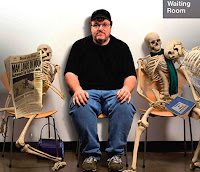

Earlier this year, a lot of unnecessary controversy was generated by muckraking filmmaker Michael Moore's excellent indictment of the American healthcare system, Sicko. I say unnecessary because, despite whatever feelings one may have about Moore or his politics, only the most ruthless capitalist would be unwilling to admit that the way we care for the sick in this country is almost irredeemably screwed up. We've given an entity as unscrupulous and indifferent as the free market control over the single most imperative decision in human existence -- literally, whether we live or die. Regardless of what Fox business-creature Neil Cavuto may have to say on the subject, healthcare and profit are two thoroughly antithetical concepts. Giving CEOs the authority to stand on the edge of the arena and issue a final thumbs-up or down while we lay incapacitated or dying is like charging a lion with protecting the Christians.

The most shocking and infuriating two minutes of Sicko -- and the most effective, as Moore wisely allows the guilty parties to do all the talking for him -- provide an irrefutable answer to the question of just how things got this way, how a system that was once predicated on a commitment to good healthcare for all Americans became a cynical money-generating engine that's perfectly willing to let people suffer if it means turning a profit. Moore plays part of an audiotaped conversation between Richard Nixon and his flunky-esque Assistant for Domestic Affairs, John Ehrlichman. The conversation is staggering insofar as the complete lack of shame on display (even from two men whose ignominy was already the stuff of legend). Ehrlichman advises Nixon on a plan to overhaul American healthcare that's being put forth by industrialist Edgar Kaiser, the founder of Kaiser Permanente. Nixon says to Ehrlichman, in classic insufferable, who-gives-a-crap-about-the-little-people fashion, "You know I'm not keen on any of these damn medical programs." Erlichman reassures him by saying the magic words: "This is a private enterprise one. Edgar Kaiser is running his Permanente deal for profit. All incentives are toward less medical care, because the less care they give them the more money they make."

Nixon's reaction?

"Well that appeals to me."

Thus were sown the seeds of the modern HMO; the day after that conversation took place, on February 18th, 1971, Nixon proposed a new National Health Strategy based on managed care from private companies. It worked toward obliterating social medical programs -- because "Socialized Medicine" had long been dirty words, the product of anti-Soviet paranoia -- and masked greed under the guise of providing Americans with the best care money could buy, which was great as long as a patient had money to afford the best care.

Nataline Sarkisyan's family had health insurance, and maybe that's the most appalling aspect of her story. She never should have died because she was one of the "lucky ones"; the services were in place to save her life. Her parents fully expected that when their child got sick there would be no questions, no arguments, no delays -- there would just be the care she needed. They lived in the most powerful, wealthy and technologically advanced country in the world, after all, and they both had good jobs and did their part to contribute to society. They were living the American dream. They were part of it.

Now they're left demanding answers -- wanting to know why, in this wealthy nation, there was even a question as to whether it was fiscally prudent to save the life of their daughter.

The fact is this: It's always cheaper to refuse care, and when making money is the motive, believing any consideration other than cost to be paramount isn't just naïve -- it'll get you killed. It's simply never a good idea to trust anyone who stands to profit.

The mammoth company for which I work made sure I had the best possible medical care when I needed it -- they paid for it. I never feared coming up with the money to see a doctor which meant that I discovered the tumor in my head before it grew to the size of a golf-ball which meant that it could still be removed through a procedure done by only three hospitals in the country.

It's because of all of this that I sit here today able to tell you about it.

I'm not sure Miguel could say the same.

And I doubt his wife and children believe that my life is worth any more than his.

Thursday, April 21, 2011

Quote of the Day


"'Every day I am haunted by the fact that I gave impoverished Massachusetts citizens a chance to receive health care,' Romney told reporters Wednesday, adding that he feels ashamed whenever he looks back at how he forged bipartisan support to help uninsured Americans afford medicine to cure their illnesses. 'I'm only human, and I've made mistakes. None bigger, of course, than helping cancer patients receive chemotherapy treatments and making sure that those suffering from pediatric AIDS could obtain medications, but that's my cross to bear. My hope is that Republican voters will one day forgive me for making it easier for sick people—especially low-income sick people—to go to the hospital and see a doctor,' Romney added. 'It was wrong, and I'm sorry.'"

-- From the Onion article "Mitt Romney Haunted By Past Of Trying To Help Uninsured Sick People"

Tuesday, February 22, 2011

Bonus Quote of the Day


"A federal judge on Tuesday threw out a lawsuit claiming that President Barack Obama's requirement that all Americans have health insurance violates the religious freedom of those who rely on God to protect them."

-- From the Associated Press

I just can't make that any funnier than it already is.

Tuesday, March 30, 2010

Quote of the Day


"For years I've suggested that racism was in decline and yeah, there are some, you know, incidents that still happen with regards to racism, but most of the claims I've said for years, well, they're not really real. But I realize now that I was wrong. For I now too feel the pain of racism. Racism has been dropped at my front door and the front door of all lighter-skinned Americans. The health care bill the president just singed into law includes a 10 percent tax on all indoor tanning sessions starting July 1st, and I say, who uses tanning? Is it dark-skinned people? I don't think so. I would guess that most tanning sessions are from light-skinned Americans. Why would the President of the United States of America -- a man who says he understands racism, a man who has been confronted with racism -- why would he sign such a racist law? Why would he agree to do that?"

-- Doc Thompson, filling in for Glenn Beck on his radio show

Actually, the real Quotes of the Day are from Jason Linkins and the readers over at HuffPo, who are crapping bananas over this blatantly racist comment.

You know, I've been more than willing to be part of the pile-on when one of the right-wing types says something genuinely racist -- and Lord knows it happens on occasion. But a little tip for the other side: Nobody's going to listen to you when you rail against something truly hateful if you work up the same amount of outrage over something that's obviously a freaking joke.

On that note:

Related: DXM: Why So Serious?/4.25.08

Friday, March 26, 2010

They Eat Their Own


For some reason I didn't really bother getting into this, but right after the health care bill vote last Sunday, former Bush speech writer David Frum wrote a shockingly honest piece on how America's conservatives had just gotten their asses handed to them -- and how they had no one to blame but themselves.

If you haven't read it, I really suggest you take a look.

Well, suffice it to say that Frum's right-wing overseers and peers are responding to his self-criticism and examination with all the restraint, dignity and introspection you'd expect.

Mediaite: David Frum Says He Was Fired for Writing His "Waterloo" Column/3.26.10

Thursday, March 25, 2010

Dangerous Mindless: Update


So somebody sent a threatening letter containing a white powdery substance to Democratic Representative Anthony Weiner of New York -- who's been an outspoken proponent of health care reform.

Hazmat units are conducting tests on the powder and thirteen people who came into contact with it are being decontaminated.

In case you're looking for the right word to describe this, let me see if I can help you out: terrorism.

CBS News: Anthony Weiner's Office Receives Threatening Letter Containing White Powder/3.25.10

Tuesday, March 23, 2010

Not Just a Bill

Quote of the Day


"This is a big fucking deal."

-- Vice President Joe Biden to President Obama during the signing of the health care reform bill into law

You know what? He's absolutely fucking right.

How great is it that that's gonna go into the history books?

(Update: Bonus Quote of the Day: "What Biden actually said was, 'I have a big fucking dick.' Still, inappropriate to the occasion." -- Andy Borowitz on Twitter)

Monday, March 22, 2010

Firestarters


The Washington Post's Dana Milbank catalogs in pretty vivid detail the insanity, rage, thuggery, and all-around shit-stirring that came from the tea baggers and their supporters among congressional Republicans during yesterday's final health care reform debate.

It's a must-read because it really highlights just how entirely the GOP has allowed itself to become the party of dangerous, unadulterated madness.

The Washington Post: Republican Lawmakers Stir Up the Tea Party Crowd/3.22.10

Much Respect


I wanted to take a minute and say publicly something I said last night privately.

I've been lucky enough to accomplish quite a bit during my career; there have been a couple of milestones of which I think I really have the right to be proud. But I can't say that I had a hands-on role in helping to make history -- to change things for the better in a way that will likely be remembered for generations.

As of last night, Jacki Schechner can.

For months now she's toiled away tirelessly as the communications director for Health Care for America Now -- the largest non-profit healthcare campaign in the country -- working long, often thankless hours trying to make affordable medical care for all a reality. I've watched on the sidelines as she's taken up a fight and often beat her head against a wall repeatedly in the name of a cause she wholeheartedly believes in. It's because of this kind of dedication on the part of her and others like her that comprehensive health care reform -- while by no means perfect legislation -- is now a reality in this country.

It's astonishing when you think about it: Jacki played a pivotal grass-roots role in helping to bring to fruition an idea that's eluded America for decades.

She has every reason to be proud, and to be honest I kind of stand in awe of her this morning.

Congrats, Jax. Not bad for an ex-CNN employee.

Enjoy the glory.

Thursday, March 18, 2010

"I'll Decide When To Give You Money"


This video's really making the rounds today -- it's usually accompanied by words like shocking, disgusting, and cruel. I'm going to forgo all of those descriptors, mostly because I think they're unnecessary; the 40-second recording speaks for itself, and you can decide on your own how you feel about it.

What I'll actually comment on, though, is the almost incomprehensible stupidity -- born, I'd imagine, out of sheer arrogance and a submission to the mob mentality -- of pulling something like this at a public political protest, surrounded by cameras. It takes a lack of common sense of epic scope to engage in behavior that can be so handily used against you and your cause in the age of viral video. Regardless of your true feelings, you're a goddamned moron if you allow yourself to be photographed treating someone -- almost anyone -- this way, and to me that speaks volumes about the level of uncontrollable rage coming from the right these days.

This was shot at an anti-health care reform tea bagger rally in Columbus, Ohio two days ago. The man sitting on the ground is carrying a sign which states that he suffers from Parkinson's. The reaction he gets from a few members of the crowd is -- unfortunate.

Wednesday, March 17, 2010

Quote of the Day


"If I can vote for this bill, there's not many people who shouldn't be able to support it."

-- Dennis Kucinich, changing his position on the health care reform bill and handing the Utopia-or-Bust progressive faction its ass in the process

Thursday, March 11, 2010

Dennis Weary


Back in the late 80s, Florida's governor was a Republican named Bob Martinez. He accomplished a couple of inarguably laudable goals while in office, but about half-way through his tenure he kind of seemed to go off the rails. In addition to implementing a controversial new tax -- which as we all know is strictly verboten under the GOP charter -- he fought to restrict abortion, tried to go on an execution spree to indiscriminately clear out Florida's death row, and, most memorably, pushed to have 2 Live Crew's idiotic album As Nasty As They Wanna Be declared obscene and therefore outlawed.

Needless to say, Martinez was swiftly run out of office the first chance voters got.

Here's the thing, though: While I strongly disagreed with just about everything Martinez did, and did just about everything I could to get him replaced, I had to sort of respect him. Once he began going really far-right, his approval numbers plummeted, and yet in spite of this he persevered -- he just kept right on pushing forward with his astonishingly unpopular and ideologic agenda. He did this, I have to assume, because he truly believed in it. (Either that or he ran out of medication two years into his term and couldn't find an open Walgreens.) For Bob Martinez, doing what he considered to be right was the most important thing -- even if it meant career suicide.

Now before anybody mouths off and starts lobbing questions as to why I can respect somebody like Martinez for sticking to his convictions while berating, say, George W. Bush for ostensibly doing the same, it's because there wasn't a moment that I can remember when Martinez didn't accept full responsibility for the unpopular stances he was taking; Bush on the other hand did everything he could to have it both ways -- to pull all kinds of repugnant demagoguery, then obfuscate, misdirect and generally pass the buck in an effort not to take responsibility for the shit-pile he'd created.

The point of all of this, though, is that standing by the courage of your beliefs is important; it's typically the simplest form of nobility.

But it's equally courageous to recognize when those beliefs are bearing no fruit whatsoever and are, in fact, doing more harm than good.

Which brings us to Dennis Kucinich.

I realize that right now many on the left are really ganging up on poor Kucinich (the right, meanwhile has always laughed him off, maybe with good reason) because of his stand against the current Democratic health care reform bill. Kucinich is pushing to scrap the bill because, in his mind, it simply doesn't go far enough in achieving the Great Progressive Utopia he and those like him believe this country can and should one day be. I've said quite a few times recently that this form of black-and-white, all-or-nothing politics from either side does little to actually benefit the country, since the political process itself has always been about a certain amount of compromise: One side pushes, the other side pushes back, the two sides meet at some reasonable proximity to the middle with the knowledge that some satisfaction is better than none at all.

This couldn't be more true than when it comes to the health care debate -- when millions of lives are at stake. Holding out for perfection, accepting nothing less, will get people killed this time around. Kucinich should realize that. Yes, you have to be a guy with ideals -- but you also have to be effective as a legislator.

As Salon points out today, Kucinich is really only one of these.

This is from his bio:

"In Congress, Kucinich has authored and co-sponsored legislation to create a national health care system, preserve Social Security, lower the costs of prescription drugs, provide economic development through infrastructure improvements, abolish the death penalty, provide universal prekindergarten to all 3, 4, and 5 year olds, create a Department of Peace, regulate genetically engineered foods, repeal the USA PATRIOT Act, and provide tax relief to working class families."

Notice how not one of the above pieces of legislation ever came to fruition. In fact, as Salon goes on to describe, of the 97 bills Kucinich has sponsored in the past 13 years, only three have become law. One of those was a bill "to designate the facility of the United States Postal Service located at 14500 Lorain Avenue in Cleveland, Ohio as the 'John P. Gallagher Post Office Building.'" Important stuff, obviously.

I've talked about this lately to the point where I'm blue in the face: An extreme point of view is typically its own worst enemy. It doesn't matter how noble your cause may be -- it's absolutely meaningless if you can't actually do anything about it. Ideals without results of any kind are essentially worthless.

And when it comes to this particular issue -- reforming our broken health care system -- it's not just impractical and unthinkably stupid to stand in the way of major progress in favor of holding out for some legislative Shangri-la; it's flat-out immoral.

As with Bob Martinez all those years ago, I can respect Kucinich's stand, but there's no way in hell I can support it.

Wednesday, March 10, 2010

Attention Span


Hey, did you hear about yesterday's pro-health care reform rally in Washington, DC?

You might not have if you watched any of the cable news networks.

Yeah, the protest sponsored by "Health Care for America Now!" and various other pro-reform groups got a couple of good hits on MSNBC and CNN, as well as at least one network news mention, but for a rally that brought thousands of people into the streets of DC, that's somewhat anemic. Contrast that with the slavish live team coverage that happens anytime a group of tea baggers gets together to bitch about everything from the encroaching communist threat to Obama's obvious resemblance to Adolf Hitler and the Biblically predicted Anti-Christ.

Jacki Schechner is the national communications director for HCAN, which means that it's her job to push the group's message to the press -- and it goes without saying that she's got her work cut out for her, through absolutely no fault of her own. In keeping with tradition, it would take Spencer Tunick-style mass nudity or maybe a bonfire on the steps of the Capitol for a left-leaning rally to get wall-to-wall news coverage these days.

And that's obviously the problem, one that's highlighted by both Cesca and Digby today. They've each noticed the discrepancy and have brought up separate relevant points.

Cesca argues that the lack of press -- or at least the disparity in coverage -- once again proves that the so-called liberal media is anything but. I've argued before that whether or not the people putting the news on the air stand on the left politically, the news you get from them is generally center-right -- the reason being that conservatives have become so admirably adept at using the "liberal media" label as a pejorative Scarlet Letter against a broad spectrum of news outlets that those outlets constantly overcompensate. There isn't a newsroom I've worked in during my career that the fear of being stigmatized as liberally biased wasn't always omnipresent. The usual suspects on the right consistently beat the drum of the supposed unfriendly media for one simple reason: They know that it works -- it allows them to control the narrative. Whenever you hear somebody blather on about how "liberal" the media are, trust me, it's propagandistic horseshit. Maybe they are in spirit, but absolutely not in practice. Certainly not these days.

Meanwhile, Digby expounds on the notion of what it takes for either side to get noticed by the press. I've said before that, for a long time, the most irritating aspect of any progressive political protest was its insistence on taking a page directly out of the 60s playbook, which meant dressing up like extras in Disney's Main Street Electrical Parade and dancing around like idiots. This accomplished nothing other than confirming the suspicions of those who were ostensibly being rallied against -- namely that the left was comprised of a bunch of children who couldn't get their act together and weren't to be taken seriously under any circumstances. The correct way to protest -- especially something like health care, which is, literally, serious as a heart attack -- was always to stand as one entity rather than as a series of individuals. That's because, while in the 60s the individual could be seen as a threat to the establishment, since that era, the entire notion of individualism has been co-opted by the establishment and watered down so that it's essentially meaningless. Anything you can possibly consider yourself -- any way you might hope to stand out -- has already been collected, repackaged and done to death by everyone from Hollister to Hot Topic.

The problem, though, is that the press does in fact love a freakshow. That's why it covers the hell out of the tea bagger rallies -- precisely because they're often packed to the brim with largely ignorant paranoiacs who are more than happy to grab the nearest mic and spout off one completely insane soundbite after another. These people feel nothing even approaching shame when they shout about how Barack Obama and the boogeyman of "big government" are going to bring about the End of Days (or at the very least the end of the country). That kind of crap makes for great TV. Much better TV than a large group of people focused on angrily demanding better health care.

Put these two things together -- the media's unwillingness to be perceived as favoring the left-wing perspective, even to the point of excluding the left-wing perspective, and their love of reality TV-style crazy -- and you've got a recipe for why a serious progressive politics rally would never get the kind of coverage a tea bagger gathering would.

The only thing that might tip the scales is sheer numbers -- a willingness to hit the streets by the hundreds of thousands. That's always been one place where the left has lacked -- and admittedly, for that, they have no one to blame but themselves.

Monday, March 8, 2010

Bring the Noise


Wanted to quickly do my good friend Jacki Schechner a favor and let everybody know about an event that's going on tomorrow in Washington, DC.

According to a press release from Jacki and her group "Health Care for America Now," tomorrow morning executives from the country's health care industry will meet at the Ritz Carlton in Georgetown, at 22nd and M. They've billed themselves collectively as "America's Health Insurance Plans" and their goal is to quickly map out a way to scuttle any meaningful shot at health care reform.

HCAN and various other pro-reform groups will be staging a protest in which they'll confront these executives during the meeting at the Ritz, in an effort to get in their faces and show them that real people are being impacted by their ongoing efforts to deny quality medical care to millions of Americans, all in the name of making boatloads of money for their respective companies.

If you can make it to this thing, please do. At least show these people that their actions have consequences -- and that they can't operate with impunity.

The rally starts at 11:45am.