Showing posts with label maxine turner. Show all posts

Wednesday, July 10, 2013

Quote of the Day


"“‘Bleeds when shot' ... been there already, no thanks assholes."

-- Colin Goddard

I'm reluctant to even bother mentioning this item because really it's what the people behind it want. They team who put together the product I'm about to bring up flawlessly blends the cynical marketing ethos which dictates that negative publicity is actually good publicity with the cackling playground bully defiance we've come to expect from the modern political right. And the result is, predictably, fucking unconscionable.

You probably already know about Zombie Industries, the company that made some headlines and drew a lot of impotent indignation a few months back when it began selling zombie mannequin targets for gun enthusiasts that actually "bleed" when you shoot them. The targets came in all kinds of shapes, sizes, and likenesses, including one specifically made to look like President Obama and one called "The Ex" that was basically a woman in a bra with a bellybutton ring (tellingly, the mannequin didn't look at all like a "zombie" beyond a little red paint splashed across it). While the NRA, in what I guess passes for a rare show of decency, asked that Zombie Industries remove the bleeding Obama target from the company's booth at its latest convention, it's not like it stopped selling the thing. It actually did discontinue production on "The Ex," what I guess also passes for a show of decency, but by that time the news had been made and the company had reaped the benefit of everyone suddenly knowing about its existence.

Now, Zombie Industries has a new target it's marketing. It's called "The Gun Control Lobbyist," what it bills as "The Most Dangerous Zombie in the USA Today." As usual, it bleeds when you shoot it, allowing tough-guy gun fetishists the purest form of wish-fulfillment anyone could legally grant them in a country that has yet to turn the Lower Ninth Ward into a game preserve. The ads for "The Gun Control Lobbyist" feature, of course, an image of the actual target in the foreground -- but in the background is a darkened photograph of actual gun control activists speaking in Washington. Among them is Colin Goddard, who works at the Brady Campaign to Prevent Gun Violence. What brought Colin Goddard to the Brady Campaign and made him an outspoken critic of America's unyielding lust for firepower and the damage it's caused to so many lives? What made him a vocal proponent of gun safety?

Colin Goddard was a student at Virginia Tech back in 2007. He was shot four times during the rampage there that left 32 people dead.

See, Goddard knows what it's like to be shot by a guy with a gun. Someone who was ostensibly a good guy with a gun -- in that he acquired his arsenal entirely according to the letter of the law -- right up until he became a bad guy with a gun. With more than one gun, in fact.

Goddard has of course asked that Zombie Industries remove his picture from their ad -- hence his brilliant quote above -- but why would they possible do something like that? And even if they do decide to comply with his request, again, the damage is already done. By calling them out for being the sociopaths they are, Goddard just brought them the attention they were aiming for in the first place. The company gets asshole cred from the right for pissing-off those pussy liberals and now everyone who may not have known about the "Gun Control Lobbyist" target certainly does. It's a win-win for them.

But it still leaves us with the problem of what can be done about a group of people who positively revel in seeing their enemies helplessly plead for a measure of humanity from them; who love knowing that they get under liberals' skin as a kind of sport and who see this as its own reward; who have no shame, decency, or remorse and who therefore can't be reasoned with or intimidated. A group of people who can look at a guy who was shot four times and basically make fun of him.

At this point I think that decent people are left with only one option, that there's only one thing that will make gun worshipers and their NRA overlords understand what they're advocating for and whom they're standing against.

Shoot them.

No, really.

Do you honestly think Wayne LaPierre, or Ted Nugent, or the CEO of Zombie Industries, would really continue to laugh in the faces of victims of gun violence if somebody put him down on the ground, pissing his pants, and pumped four rounds into him?

Everyone knows that there's only one way to truly deal with a bully: you fight back. Beat the living shit out of him once -- send him crying and bleeding to the hospital -- and he will never touch you again.

Well, consider my suggestion the same thing, writ large.

It's an idea who's time has come, America.

Time to go big or go home.

Time to speak to them in the only language they understand.
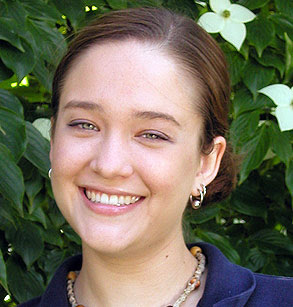


It goes without saying that thinking about the horrors Colin Goddard went through and somehow survived immediately brings me back to this piece from April of 2007. The story of Max Turner. What still may be the best thing that's ever been posted at this site.

"And All That Could Have Been" (Originally Published, 4.19.07)

There were maybe five of us, gathered around a television, watching a woman die.

I had only been in television news for a few months and hadn't yet developed the rough and thickened callus on my soul; that unavoidable consequence of a life lived knee-deep in day-to-day tragedy; the natural armor required to sustain such an existence. I was still learning to crawl among those who had long since evolved into wearied and indifferent creatures for whom another dead body was another dead body was another dead body. They already knew something which I would eventually have to learn -- that sometimes, you have to suppress your gag reflex, bury your humanity and willingly allow the more mechanized aspects of your personality to roll over your emotions like a tank. You needed to do this to get the job done -- and to keep yourself from going insane.

I didn't yet have the luxury of such peaceful detachment though, and so as I stood there -- watching the live feed from Jackson Memorial Hospital in Downtown Miami -- I found that I could barely keep at bay the myriad unnerving thoughts clawing at the inside of my skull.

The pictures we were watching, live and in brutally vivid color, showed the Miami-Dade Fire-Rescue chopper setting down on the hospital's rooftop helipad and the subsequent whirlwind of controlled chaos as the young woman on board was quickly transferred onto a stretcher and whisked inside. In plain view the entire time -- the desperate and seemingly hopeless fight to save her life. I simply stared as one of the doctors jumped onto the stretcher and straddled the woman's naked upper-body, pumping away at her failing heart, his palms flat against her skin. I closed my eyes for an instant to avoid the sight of the bag breathing air into her faltering lungs. I opened them just before the stretcher slammed through the double-doors leading into the hospital -- just in time to catch a glimpse of the massive head wound she'd received less than a half-hour earlier, when someone had fired a 9mm round through her driver's-side window while trying to carjack her in broad daylight, in the middle of tony Coral Gables.

And while those around me cracked jokes, or discussed lunch, or waited to rush the tape of what we were watching into editing -- I silently demanded answers of myself. I wanted to know what gave me the right to watch this woman's final moments of life. I wanted to know who I thought I was that I should be privy to such tragic vulnerability -- to witness the dying breath of a complete stranger. I was a twenty-one-year-old who knew nothing of this person -- nothing of her life, her loves, her hopes and dreams -- yet through nothing more noble than the technology which made such macabre voyeurism possible, I was allowed to be there for her death.

I remember finally turning my head. "I'm so sorry," was all I could whisper as I cast my eyes downward in shame and walked quickly away.

Since that moment, my skin has grown considerably thicker and more bristly. What used to be soft has calcified under the fifteen-year steady drip of daily disaster; what was once overly sincere naivete has given way to the kind of gallows humor that can turn even the most heartbreaking tragedy into a ghastly joke -- one which always ends with a smirk and the cynical admission that only hell can await such crass insensitivity.

This is the necessary defense mechanism -- and this is what was instinctively exploited in the hours that followed the worst shooting rampage in American history.

As the details of what had unfolded on the Virginia Tech campus poured in, I found myself at first engaging in verbal gymnastics.

T.S. Eliot once said something about April being the cruelest month; that was in a poem known fittingly as "The Burial of the Dead," which was the first part of "The Waste Land;" The Who once sang about a "Teenage Wasteland," which is what Virginia Tech has now become.

Then, as the hours and hours passed and the body count skyrocketed -- the sheer enormity of the violence finally becoming clear -- I moved on to logical analysis, followed by a kind of rational righteous indignation. I shook my head at what I knew would surely be the knee-jerk reaction to come: the hand-wringing and political posturing over what might have been done to prevent what was, in reality, a devastating human anomaly -- one that may have been anticipated, but likely couldn't have been stopped by anything short of locking up a troubled and dangerous kid who, until Monday morning, hadn't technically broken the law. I swallowed outrage at the vile opportunism of Scientologists, who were quick to claim that psychiatry was behind the gunman's brutal impulses, and Jack Thompson, who wasn't even aware of the killer's identity and yet was already pointing the finger of blame at the time-honored boogeymen of video games and pop culture. I clenched my fists, closed my eyes and exhaled my fury at one television news anchor agreeing with a local pastor's unforgivably trite nostrum that God sometimes works in mysterious ways. I worried about the possibility that a substantial portion of creative, dark, shy or otherwise unusual kids might now find themselves eyed with suspicion and apprehension -- simply because of one twisted bastard with delusions of martyrdom and the weaponry to bring his furious fantasies to life. I wondered if someone might demand to know why it's as easy to buy a Glock 19 in this country as it is to buy a Happy Meal -- and finally do something about it.

By yesterday morning, I had shut out the ridiculous calls by some for sirens on all American college campuses, and moved on to the curious spectacle of the collegiate mourning process and the round-the-clock coverage of it. I stared quizzically at my monitor as students gathered to loudly proclaim their "Hokie Spirit" -- admitting quietly to myself that truer words were never spoken. I wondered, were I a male Virginia Tech student, if I would pull an Otter-esque line about not wanting to be alone during such a traumatic time in an effort to get CNN's Brianna Keilar to come back to my dorm room. I even sang Team America's I'm So Ronery to myself everytime the image of the gunman -- finally identified as South Korean-born Cho Seung-Hui -- flashed across the screen.

Mostly though, I concerned myself with the question of why every news correspondent in the country had descended on the tiny town of Blacksburg, Virginia -- like locusts desperate to devour the bumper crop of suffering until there was simply nothing left. All the more disconcerting, the millions of television viewers eager to have that pain regurgitated back into their own hungry mouths.

There was, and still is, something grotesquely orgiastic about the whole thing.

Over the past twenty-four hours, the names and faces of the victims have surfaced, a few at a time. As has become ritual, the various news organizations are parrotting every possible detail they can gather as to who these young people were in an admittedly genuine effort to both humanize and memorialize them. The ages of the victims always come first -- simply because there's no other single characteristic about each person that can better convey the overwhelming nature of what was lost in this senseless act. The ages are usually followed by majors, extracurricular activities, then one or two prosaic platitudes about their smiles or infectious personalities or optimistic outlook on life -- this final trait taking on a sad irony given the situation which led to the need for disclosure of such information in the first place. Unfortunately however, no matter how noble the intentions or how powerful the tribute, it's impossible not to feel that so much is missing.

The reason is because each person's unique life is still being filtered through an intermediary -- told second-hand via the one relaying it.

For the first time though, there's another way to learn about the victims of this kind of atrocity -- a way which excises the middle-man, and lets them tell their own life stories in their own words.

As incomprehensible as it would have seemed in life, MySpace has provided each victim his or her own epitaph in death.

Even a cursory scan of their pages reveals the true heartbreaking depths of this loss.

I'm not sure what led me to search MySpace for profiles of some of the dead; I'd like to believe that it was an honest desire to find out who these kids really were -- what they loved and hated, what they wanted for themselves and their futures before it was all ripped away from them by someone who had a plan for their lives they weren't even aware of, nor could they stop.

For some reason, the first name I searched was the victim whom the least was known about at the time.

Her name was Maxine Turner.

She was a twenty-two-year-old chemical engineering student.

Her MySpace address contains the words "Super Sneaky Ninja," which -- despite not knowing the meaning behind it -- brought a sad smile to my face when I first saw it.

Maxine, as expected, went by the nickname Max.

Her site, although rather unremarkable, lists her as single, from Vienna, Virginia, 5'1" and slim -- no doubt the result of Tae Kwon Do classes, which she took regularly. She didn't smoke, but she did drink.

She hoped to have children someday.

The song posted on her profile, which plays automatically, is, strangely, one of my favorites from my own youth -- Men At Work's Overkill, sung by the band's lead singer Colin Hay. I listened to it as I moved beyond the basic information into the tiny singularities of Max's life. There's a blue box which sits directly under the "About Me" headline; it reads "Your Superhero Profile." Apparently, her superhero name was "The Hour Dog"; her special power was biotechnology; her only weakness was -- ironically, devastatingly -- blood; her mode of transportation was a pogo stick.

She wanted to meet Shakespeare, Christian Bale and John Cusack.

Her final blog entry is entitled "For the Ladies," and has her mood listed as "Mischievous." It's an extended and oddly sweet dissertation on the right and wrong way to measure yourself to ensure that a bra is the correct size for your body.

Of all the little details on her main MySpace page though, none proves so haunting as the timeline of comments -- concerned friends at first begging over and over again for a simple phone call, then on Tuesday morning, those same friends' comments abruptly changing to messages of sorrow and loss.

But those are just words.

It's what's inside Max Turner's "pics" page, that leaves you utterly heartbroken.


One photo shows her seated on a stone wall, facing away from the camera -- staring out over a vast valley covered in deep green.


Another shows her sitting on an empty beach, under a wide sky filled with high, white clouds. The caption simply reads "Sand Castle!"


There's a slightly blurry image of a little gray nose and large black eyes, just inches from the lense of the camera that captured it. The caption: "Say hi to Jujubee, my pretty hamster."

In one she's holding a snake, in another she's practicing Tae Kwon Do.

Beneath each picture are dozens and dozens of comments from friends and strangers alike, commemorating her life and expressing regret for her untimely death.

I never met Max Turner, and I never will; I have no doubt that this is my own loss to mourn. I know only as much about her as she herself was willing to disclose, and yet what I've seen leads me to believe that the world is an infinitely lesser place without her in it. The same can surely be said for Ross Almeddine, and Reema Samaha, and Emily Hilscher, and Ryan Clark, and Daniel Perez Cueva, and Mary Read and the more than two dozen other victims of this incomprehensible tragedy.

I'll go to my own grave grappling with the question of how someone, anyone, can be so consumed by rage that he can look at the face of Max Turner and decide that she has to die.

Like fifteen years ago, I have nothing to offer except an apology -- this time not out of shame, but out of genuine sorrow and an overwhelming sense of helplessness.

I'm sorry that humanity failed you, Max.

I'm so sorry.

Friday, April 15, 2011

And All That Could Have Been: Four Years Later


Tomorrow, April 16th, marks the four year anniversary of the Virginia Tech shooting, which left 32 innocent people dead. As I've done every year since 2007, I'm republishing the piece I wrote in the days that followed the rampage.

"And All That Could Have Been" (Originally Published, 4.19.07)

There were maybe five of us, gathered around a television, watching a woman die.

I had only been in television news for a few months and hadn't yet developed the rough and thickened callus on my soul; that unavoidable consequence of a life lived knee-deep in day-to-day tragedy; the natural armor required to sustain such an existence. I was still learning to crawl among those who had long since evolved into wearied and indifferent creatures for whom another dead body was another dead body was another dead body. They already knew something which I would eventually have to learn -- that sometimes, you have to suppress your gag reflex, bury your humanity and willingly allow the more mechanized aspects of your personality to roll over your emotions like a tank. You needed to do this to get the job done -- and to keep yourself from going insane.

I didn't yet have the luxury of such peaceful detachment, though, and so as I stood there -- watching the live feed from Jackson Memorial Hospital in Downtown Miami -- I found that I could barely keep at bay the myriad unnerving thoughts clawing at the inside of my skull.

The pictures we were watching, live and in brutally vivid color, showed the Miami-Dade Fire-Rescue chopper setting down on the hospital's rooftop helipad and the subsequent whirlwind of controlled chaos as the young woman on board was quickly transferred onto a stretcher and whisked inside. In plain view the entire time -- the desperate, seemingly hopeless fight to save her life. I simply stared as one of the doctors jumped onto the stretcher and straddled the woman's naked upper-body, pumping away at her failing heart, his palms flat against her skin. I closed my eyes for an instant to avoid the sight of the bag breathing air into her faltering lungs. I opened them just before the stretcher slammed through the double-doors leading into the hospital -- just in time to catch a glimpse of the massive head wound she'd received less than a half-hour earlier, when someone had fired a 9mm round through her driver's-side window while trying to carjack her in broad daylight, in the middle of tony Coral Gables.

And while those around me cracked jokes, or discussed lunch, or waited to rush the tape of what we were watching into editing -- I silently demanded answers of myself. I wanted to know what gave me the right to watch this woman's final moments of life. I wanted to know who I thought I was that I should be privy to such tragic vulnerability -- to witness the dying breath of a complete stranger. I was a twenty-one-year-old who knew nothing of this person -- nothing of her life, her loves, her hopes and dreams -- yet through nothing more noble than the technology which made such macabre voyeurism possible, I was allowed to be there for her death.

I remember finally turning my head. "I'm so sorry," was all I could whisper as I cast my eyes downward in shame and walked quickly away.

Since that moment, my skin has grown considerably thicker and more bristly. What used to be soft has calcified under the fifteen-year steady drip of daily disaster; what was once overly sincere naivete has given way to the kind of gallows humor that can turn even the most heartbreaking tragedy into a ghastly joke -- one which always ends with a smirk and the cynical admission that only hell can await such crass insensitivity.

This is the necessary defense mechanism -- and this is what was instinctively exploited in the hours that followed the worst shooting rampage in American history.

As the details of what had unfolded on the Virginia Tech campus poured in, I found myself at first engaging in verbal gymnastics.

T.S. Eliot once said something about April being the cruelest month; that was in a poem known fittingly as "The Burial of the Dead," which was the first part of "The Waste Land"; The Who once sang about a "Teenage Wasteland," which is what Virginia Tech has now become.

Then, as the hours and hours passed and the body count skyrocketed -- the sheer enormity of the violence finally becoming clear -- I moved on to logical analysis, followed by a kind of rational righteous indignation. I shook my head at what I knew would surely be the knee-jerk reaction to come: the hand-wringing and political posturing over what might have been done to prevent what was, in reality, a devastating human anomaly -- one that may have been anticipated, but likely couldn't have been stopped by anything short of locking up a troubled and dangerous kid who, until Monday morning, hadn't technically broken the law. I swallowed outrage at the vile opportunism of Scientologists, who were quick to claim that psychiatry was behind the gunman's brutal impulses, and Jack Thompson, who wasn't even aware of the killer's identity and yet was already pointing the finger of blame at the time-honored boogeymen of video games and pop culture. I clenched my fists, closed my eyes and exhaled my fury at one television news anchor agreeing with a local pastor's unforgivably trite nostrum that God sometimes works in mysterious ways. I worried about the possibility that a substantial portion of creative, dark, shy or otherwise unusual kids might now find themselves eyed with suspicion and apprehension -- simply because of one twisted bastard with delusions of martyrdom and the weaponry to bring his furious fantasies to life. I wondered if someone might demand to know why it's as easy to buy a Glock 19 in this country as it is to buy a Happy Meal -- and finally do something about it.

By yesterday morning, I had shut out the ridiculous calls by some for sirens on all American college campuses, and moved on to the curious spectacle of the collegiate mourning process and the round-the-clock coverage of it. I stared quizzically at my monitor as students gathered to loudly proclaim their "Hokie Spirit" -- admitting quietly to myself that truer words were never spoken. I wondered, were I a male Virginia Tech student, if I would pull an Otter-esque line about not wanting to be alone during such a traumatic time in an effort to get CNN's Brianna Keilar to come back to my dorm room. I even sang Team America's I'm So Ronery to myself everytime the image of the gunman -- finally identified as South Korean-born Cho Seung-Hui -- flashed across the screen.

Mostly, though, I concerned myself with the question of why every news correspondent in the country had descended on the tiny town of Blacksburg, Virginia -- like locusts desperate to devour the bumper crop of suffering until there was simply nothing left. All the more disconcerting, the millions of television viewers eager to have that pain regurgitated back into their own hungry mouths.

There was, and still is, something grotesquely orgiastic about the whole thing.

Over the past twenty-four hours, the names and faces of the victims have surfaced, a few at a time. As has become ritual, the various news organizations are parrotting every possible detail they can gather as to who these young people were in an admittedly genuine effort to both humanize and memorialize them. The ages of the victims always come first -- simply because there's no other single characteristic about each person that can better convey the overwhelming nature of what was lost in this senseless act. The ages are usually followed by majors, extracurricular activities, then one or two prosaic platitudes about their smiles or infectious personalities or optimistic outlook on life -- this final trait taking on a sad irony given the situation which led to the need for disclosure of such information in the first place. Unfortunately, however, no matter how noble the intentions or how powerful the tribute, it's impossible not to feel that so much is missing.

The reason is because each person's unique life is still being filtered through an intermediary -- told second-hand via the one relaying it.

For the first time though, there's another way to learn about the victims of this kind of atrocity -- a way which excises the middle-man, and lets them tell their own life stories in their own words.

As incomprehensible as it would have seemed in life, MySpace has provided each victim his or her own epitaph in death.

Even a cursory scan of their pages reveals the true heartbreaking depths of this loss.

I'm not sure what led me to search MySpace for profiles of some of the dead; I'd like to believe that it was an honest desire to find out who these kids really were -- what they loved and hated, what they wanted for themselves and their futures before it was all ripped away from them by someone who had a plan for their lives they weren't even aware of, nor could they stop.

For some reason, the first name I searched was the victim whom the least was known about at the time.

Her name was Maxine Turner.

She was a twenty-two-year-old chemical engineering student.

Her MySpace address contains the words "Super Sneaky Ninja," which -- despite not knowing the meaning behind it -- brought a sad smile to my face when I first saw it.

Maxine, as expected, went by the nickname Max.

Her site, although rather unremarkable, lists her as single, from Vienna, Virginia, 5'1" and slim -- no doubt the result of Tae Kwon Do classes, which she took regularly. She didn't smoke, but she did drink.

She hoped to have children someday.

The song posted on her profile, which plays automatically, is, strangely, one of my favorites from my own youth -- Men At Work's Overkill, sung by the band's lead singer Colin Hay. I listened to it as I moved beyond the basic information into the tiny singularities of Max's life. There's a blue box which sits directly under the "About Me" headline; it reads "Your Superhero Profile." Apparently, her superhero name was "The Hour Dog"; her special power was biotechnology; her only weakness was -- ironically, devastatingly -- blood; her mode of transportation was a pogo stick.

She wanted to meet Shakespeare, Christian Bale and John Cusack.

Her final blog entry is entitled "For the Ladies," and has her mood listed as "Mischievous." It's an extended and oddly sweet dissertation on the right and wrong way to measure yourself to ensure that a bra is the correct size for your body.

Of all the little details on her main MySpace page though, none proves so haunting as the timeline of comments -- concerned friends at first begging over and over again for a simple phone call, then on Tuesday morning, those same friends' comments abruptly changing to messages of sorrow and loss.

But those are just words.

It's what's inside Max Turner's "pics" page, that leaves you utterly heartbroken.


One photo shows her seated on a stone wall, facing away from the camera -- staring out over a vast valley covered in deep green.


Another shows her sitting on an empty beach, under a wide sky filled with high, white clouds. The caption simply reads "Sand Castle!"


There's a slightly blurry image of a little gray nose and large black eyes, just inches from the lense of the camera that captured it. The caption: "Say hi to Jujubee, my pretty hamster."

In one she's holding a snake, in another she's practicing Tae Kwon Do.

Beneath each picture are dozens and dozens of comments from friends and strangers alike, commemorating her life and expressing regret for her untimely death.

I never met Max Turner, and I never will; I have no doubt that this is my own loss to mourn. I know only as much about her as she herself was willing to disclose, and yet what I've seen leads me to believe that the world is an infinitely lesser place without her in it. The same can surely be said for Ross Almeddine, and Reema Samaha, and Emily Hilscher, and Ryan Clark, and Daniel Perez Cueva, and Mary Read and the more than two dozen other victims of this incomprehensible tragedy.

I'll go to my own grave grappling with the question of how someone, anyone, can be so consumed by rage that he can look at the face of Max Turner and decide that she has to die.

Like fifteen years ago, I have nothing to offer except an apology -- this time not out of shame, but out of genuine sorrow and an overwhelming sense of helplessness.

I'm sorry that humanity failed you, Max.

I'm so sorry.

Tuesday, April 13, 2010

Tuesday Is Recycling Day


Three days from now, April 16th, will mark the three year anniversary of the Virginia Tech shooting, which left 32 innocent people dead. As I've done the past couple of years around this time, I'm reposting the piece I wrote in the days that followed the rampage. This remains my favorite thing to ever appear on this site.

"And All That Could Have Been" (Originally Published, 4.19.07)

There were maybe five of us, gathered around a television, watching a woman die.

I had only been in television news for a few months and hadn't yet developed the rough and thickened callus on my soul; that unavoidable consequence of a life lived knee-deep in day-to-day tragedy; the natural armor required to sustain such an existence. I was still learning to crawl among those who had long since evolved into wearied and indifferent creatures for whom another dead body was another dead body was another dead body. They already knew something which I would eventually have to learn -- that sometimes, you have to suppress your gag reflex, bury your humanity and willingly allow the more mechanized aspects of your personality to roll over your emotions like a tank. You needed to do this to get the job done -- and to keep yourself from going insane.

I didn't yet have the luxury of such peaceful detachment, though, and so as I stood there -- watching the live feed from Jackson Memorial Hospital in Downtown Miami -- I found that I could barely keep at bay the myriad unnerving thoughts clawing at the inside of my skull.

The pictures we were watching, live and in brutally vivid color, showed the Miami-Dade Fire-Rescue chopper setting down on the hospital's rooftop helipad and the subsequent whirlwind of controlled chaos as the young woman on board was quickly transferred onto a stretcher and whisked inside. In plain view the entire time -- the desperate, seemingly hopeless fight to save her life. I simply stared as one of the doctors jumped onto the stretcher and straddled the woman's naked upper-body, pumping away at her failing heart, his palms flat against her skin. I closed my eyes for an instant to avoid the sight of the bag breathing air into her faltering lungs. I opened them just before the stretcher slammed through the double-doors leading into the hospital -- just in time to catch a glimpse of the massive head wound she'd received less than a half-hour earlier, when someone had fired a 9mm round through her driver's-side window while trying to carjack her in broad daylight, in the middle of tony Coral Gables.

And while those around me cracked jokes, or discussed lunch, or waited to rush the tape of what we were watching into editing -- I silently demanded answers of myself. I wanted to know what gave me the right to watch this woman's final moments of life. I wanted to know who I thought I was that I should be privy to such tragic vulnerability -- to witness the dying breath of a complete stranger. I was a twenty-one-year-old who knew nothing of this person -- nothing of her life, her loves, her hopes and dreams -- yet through nothing more noble than the technology which made such macabre voyeurism possible, I was allowed to be there for her death.

I remember finally turning my head. "I'm so sorry," was all I could whisper as I cast my eyes downward in shame and walked quickly away.

Since that moment, my skin has grown considerably thicker and more bristly. What used to be soft has calcified under the fifteen-year steady drip of daily disaster; what was once overly sincere naivete has given way to the kind of gallows humor that can turn even the most heartbreaking tragedy into a ghastly joke -- one which always ends with a smirk and the cynical admission that only hell can await such crass insensitivity.

This is the necessary defense mechanism -- and this is what was instinctively exploited in the hours that followed the worst shooting rampage in American history.

As the details of what had unfolded on the Virginia Tech campus poured in, I found myself at first engaging in verbal gymnastics.

T.S. Eliot once said something about April being the cruelest month; that was in a poem known fittingly as "The Burial of the Dead," which was the first part of "The Waste Land"; The Who once sang about a "Teenage Wasteland," which is what Virginia Tech has now become.

Then, as the hours and hours passed and the body count skyrocketed -- the sheer enormity of the violence finally becoming clear -- I moved on to logical analysis, followed by a kind of rational righteous indignation. I shook my head at what I knew would surely be the knee-jerk reaction to come: the hand-wringing and political posturing over what might have been done to prevent what was, in reality, a devastating human anomaly -- one that may have been anticipated, but likely couldn't have been stopped by anything short of locking up a troubled and dangerous kid who, until Monday morning, hadn't technically broken the law. I swallowed outrage at the vile opportunism of Scientologists, who were quick to claim that psychiatry was behind the gunman's brutal impulses, and Jack Thompson, who wasn't even aware of the killer's identity and yet was already pointing the finger of blame at the time-honored boogeymen of video games and pop culture. I clenched my fists, closed my eyes and exhaled my fury at one television news anchor agreeing with a local pastor's unforgivably trite nostrum that God sometimes works in mysterious ways. I worried about the possibility that a substantial portion of creative, dark, shy or otherwise unusual kids might now find themselves eyed with suspicion and apprehension -- simply because of one twisted bastard with delusions of martyrdom and the weaponry to bring his furious fantasies to life. I wondered if someone might demand to know why it's as easy to buy a Glock 19 in this country as it is to buy a Happy Meal -- and finally do something about it.

By yesterday morning, I had shut out the ridiculous calls by some for sirens on all American college campuses, and moved on to the curious spectacle of the collegiate mourning process and the round-the-clock coverage of it. I stared quizzically at my monitor as students gathered to loudly proclaim their "Hokie Spirit" -- admitting quietly to myself that truer words were never spoken. I wondered, were I a male Virginia Tech student, if I would pull an Otter-esque line about not wanting to be alone during such a traumatic time in an effort to get CNN's Brianna Keilar to come back to my dorm room. I even sang Team America's I'm So Ronery to myself everytime the image of the gunman -- finally identified as South Korean-born Cho Seung-Hui -- flashed across the screen.

Mostly, though, I concerned myself with the question of why every news correspondent in the country had descended on the tiny town of Blacksburg, Virginia -- like locusts desperate to devour the bumper crop of suffering until there was simply nothing left. All the more disconcerting, the millions of television viewers eager to have that pain regurgitated back into their own hungry mouths.

There was, and still is, something grotesquely orgiastic about the whole thing.

Over the past twenty-four hours, the names and faces of the victims have surfaced, a few at a time. As has become ritual, the various news organizations are parrotting every possible detail they can gather as to who these young people were in an admittedly genuine effort to both humanize and memorialize them. The ages of the victims always come first -- simply because there's no other single characteristic about each person that can better convey the overwhelming nature of what was lost in this senseless act. The ages are usually followed by majors, extracurricular activities, then one or two prosaic platitudes about their smiles or infectious personalities or optimistic outlook on life -- this final trait taking on a sad irony given the situation which led to the need for disclosure of such information in the first place. Unfortunately, however, no matter how noble the intentions or how powerful the tribute, it's impossible not to feel that so much is missing.

The reason is because each person's unique life is still being filtered through an intermediary -- told second-hand via the one relaying it.

For the first time though, there's another way to learn about the victims of this kind of atrocity -- a way which excises the middle-man, and lets them tell their own life stories in their own words.

As incomprehensible as it would have seemed in life, MySpace has provided each victim his or her own epitaph in death.

Even a cursory scan of their pages reveals the true heartbreaking depths of this loss.

I'm not sure what led me to search MySpace for profiles of some of the dead; I'd like to believe that it was an honest desire to find out who these kids really were -- what they loved and hated, what they wanted for themselves and their futures before it was all ripped away from them by someone who had a plan for their lives they weren't even aware of, nor could they stop.

For some reason, the first name I searched was the victim whom the least was known about at the time.

Her name was Maxine Turner.

She was a twenty-two-year-old chemical engineering student.

Her MySpace address contains the words "Super Sneaky Ninja," which -- despite not knowing the meaning behind it -- brought a sad smile to my face when I first saw it.

Maxine, as expected, went by the nickname Max.

Her site, although rather unremarkable, lists her as single, from Vienna, Virginia, 5'1" and slim -- no doubt the result of Tae Kwon Do classes, which she took regularly. She didn't smoke, but she did drink.

She hoped to have children someday.

The song posted on her profile, which plays automatically, is, strangely, one of my favorites from my own youth -- Men At Work's Overkill, sung by the band's lead singer Colin Hay. I listened to it as I moved beyond the basic information into the tiny singularities of Max's life. There's a blue box which sits directly under the "About Me" headline; it reads "Your Superhero Profile." Apparently, her superhero name was "The Hour Dog"; her special power was biotechnology; her only weakness was -- ironically, devastatingly -- blood; her mode of transportation was a pogo stick.

She wanted to meet Shakespeare, Christian Bale and John Cusack.

Her final blog entry is entitled "For the Ladies," and has her mood listed as "Mischievous." It's an extended and oddly sweet dissertation on the right and wrong way to measure yourself to ensure that a bra is the correct size for your body.

Of all the little details on her main MySpace page though, none proves so haunting as the timeline of comments -- concerned friends at first begging over and over again for a simple phone call, then on Tuesday morning, those same friends' comments abruptly changing to messages of sorrow and loss.

But those are just words.

It's what's inside Max Turner's "pics" page, that leaves you utterly heartbroken.


One photo shows her seated on a stone wall, facing away from the camera -- staring out over a vast valley covered in deep green.


Another shows her sitting on an empty beach, under a wide sky filled with high, white clouds. The caption simply reads "Sand Castle!"


There's a slightly blurry image of a little gray nose and large black eyes, just inches from the lense of the camera that captured it. The caption: "Say hi to Jujubee, my pretty hamster."

In one she's holding a snake, in another she's practicing Tae Kwon Do.

Beneath each picture are dozens and dozens of comments from friends and strangers alike, commemorating her life and expressing regret for her untimely death.

I never met Max Turner, and I never will; I have no doubt that this is my own loss to mourn. I know only as much about her as she herself was willing to disclose, and yet what I've seen leads me to believe that the world is an infinitely lesser place without her in it. The same can surely be said for Ross Almeddine, and Reema Samaha, and Emily Hilscher, and Ryan Clark, and Daniel Perez Cueva, and Mary Read and the more than two dozen other victims of this incomprehensible tragedy.

I'll go to my own grave grappling with the question of how someone, anyone, can be so consumed by rage that he can look at the face of Max Turner and decide that she has to die.

Like fifteen years ago, I have nothing to offer except an apology -- this time not out of shame, but out of genuine sorrow and an overwhelming sense of helplessness.

I'm sorry that humanity failed you, Max.

I'm so sorry.

Thursday, April 16, 2009

And All That Could Have Been: Two Years Later


Two years ago today, a troubled 23-year-old student at Virginia Tech armed himself with two handguns and methodically stalked the school's campus in Blacksburg, Virginia. When his rampage was over, he had killed 33 people including himself. I was working for CNN at the time and wrote this piece for Deus Ex Malcontent in the days that followed the attack -- the deadliest mass shooting in U.S. history.

There were maybe five of us, gathered around a television, watching a woman die.

I had only been in television news for a few months and hadn't yet developed the rough and thickened callus on my soul; that unavoidable consequence of a life lived knee-deep in day-to-day tragedy; the natural armor required to sustain such an existence. I was still learning to crawl among those who had long since evolved into wearied and indifferent creatures for whom another dead body was another dead body was another dead body. They already knew something which I would eventually have to learn -- that sometimes, you have to suppress your gag reflex, bury your humanity and willingly allow the more mechanized aspects of your personality to roll over your emotions like a tank. You needed to do this to get the job done -- and to keep yourself from going insane.

I didn't yet have the luxury of such peaceful detachment though, and so as I stood there -- watching the live feed from Jackson Memorial Hospital in Downtown Miami -- I found that I could barely keep at bay the myriad unnerving thoughts clawing at the inside of my skull.

The pictures we were watching, live and in brutally vivid color, showed the Miami-Dade Fire-Rescue chopper setting down on the hospital's rooftop helipad and the subsequent whirlwind of controlled chaos as the young woman on board was quickly transferred onto a stretcher and whisked inside. In plain view the entire time -- the desperate and seemingly hopeless fight to save her life. I simply stared as one of the doctors jumped onto the stretcher and straddled the woman's naked upper-body, pumping away at her failing heart, his palms flat against her skin. I closed my eyes for an instant to avoid the sight of the bag breathing air into her faltering lungs. I opened them just before the stretcher slammed through the double-doors leading into the hospital -- just in time to catch a glimpse of the massive head wound she'd received less than a half-hour earlier, when someone had fired a 9mm round through her driver's-side window while trying to carjack her in broad daylight, in the middle of tony Coral Gables.

And while those around me cracked jokes, or discussed lunch, or waited to rush the tape of what we were watching into editing -- I silently demanded answers of myself. I wanted to know what gave me the right to watch this woman's final moments of life. I wanted to know who I thought I was that I should be privy to such tragic vulnerability -- to witness the dying breath of a complete stranger. I was a twenty-one-year-old who knew nothing of this person -- nothing of her life, her loves, her hopes and dreams -- yet through nothing more noble than the technology which made such macabre voyeurism possible, I was allowed to be there for her death.

I remember finally turning my head. "I'm so sorry," was all I could whisper as I cast my eyes downward in shame and walked quickly away.

Since that moment, my skin has grown considerably thicker and more bristly. What used to be soft has calcified under the fifteen-year steady drip of daily disaster; what was once overly sincere naivete has given way to the kind of gallows humor that can turn even the most heartbreaking tragedy into a ghastly joke -- one which always ends with a smirk and the cynical admission that only hell can await such crass insensitivity.

This is the necessary defense mechanism -- and this is what was instinctively exploited in the hours that followed the worst shooting rampage in American history.

As the details of what had unfolded on the Virginia Tech campus poured in, I found myself at first engaging in verbal gymnastics.

T.S. Eliot once said something about April being the cruelest month; that was in a poem known fittingly as "The Burial of the Dead," which was the first part of "The Waste Land;" The Who once sang about a "Teenage Wasteland," which is what Virginia Tech has now become.

Then, as the hours and hours passed and the body count skyrocketed -- the sheer enormity of the violence finally becoming clear -- I moved on to logical analysis, followed by a kind of rational righteous indignation. I shook my head at what I knew would surely be the knee-jerk reaction to come: the hand-wringing and political posturing over what might have been done to prevent what was, in reality, a devastating human anomaly -- one that may have been anticipated, but likely couldn't have been stopped by anything short of locking up a troubled and dangerous kid who, until Monday morning, hadn't technically broken the law. I swallowed outrage at the vile opportunism of Scientologists, who were quick to claim that psychiatry was behind the gunman's brutal impulses, and Jack Thompson, who wasn't even aware of the killer's identity and yet was already pointing the finger of blame at the time-honored boogeymen of video games and pop culture. I clenched my fists, closed my eyes and exhaled my fury at one television news anchor agreeing with a local pastor's unforgivably trite nostrum that God sometimes works in mysterious ways. I worried about the possibility that a substantial portion of creative, dark, shy or otherwise unusual kids might now find themselves eyed with suspicion and apprehension -- simply because of one twisted bastard with delusions of martyrdom and the weaponry to bring his furious fantasies to life. I wondered if someone might demand to know why it's as easy to buy a Glock 19 in this country as it is to buy a Happy Meal -- and finally do something about it.

By yesterday morning, I had shut out the ridiculous calls by some for sirens on all American college campuses, and moved on to the curious spectacle of the collegiate mourning process and the round-the-clock coverage of it. I stared quizzically at my monitor as students gathered to loudly proclaim their "Hokie Spirit" -- admitting quietly to myself that truer words were never spoken. I wondered, were I a male Virginia Tech student, if I would pull an Otter-esque line about not wanting to be alone during such a traumatic time in an effort to get CNN's Brianna Keilar to come back to my dorm room. I even sang Team America's I'm So Ronery to myself everytime the image of the gunman -- finally identified as South Korean-born Cho Seung-Hui -- flashed across the screen.

Mostly though, I concerned myself with the question of why every news correspondent in the country had descended on the tiny town of Blacksburg, Virginia -- like locusts desperate to devour the bumper crop of suffering until there was simply nothing left. All the more disconcerting, the millions of television viewers eager to have that pain regurgitated back into their own hungry mouths.

There was, and still is, something grotesquely orgiastic about the whole thing.

Over the past twenty-four hours, the names and faces of the victims have surfaced, a few at a time. As has become ritual, the various news organizations are parroting every possible detail they can gather as to who these young people were in an admittedly genuine effort to both humanize and memorialize them. The ages of the victims always come first -- simply because there's no other single characteristic about each person that can better convey the overwhelming nature of what was lost in this senseless act. The ages are usually followed by majors, extracurricular activities, then one or two prosaic platitudes about their smiles or infectious personalities or optimistic outlook on life -- this final trait taking on a sad irony given the situation which led to the need for disclosure of such information in the first place. Unfortunately however, no matter how noble the intentions or how powerful the tribute, it's impossible not to feel that so much is missing.

The reason is because each person's unique life is still being filtered through an intermediary -- told second-hand via the one relaying it.

For the first time though, there's another way to learn about the victims of this kind of atrocity -- a way which excises the middle-man, and lets them tell their own life stories in their own words.

As incomprehensible as it would have seemed in life, MySpace has provided each victim his or her own epitaph in death.

Even a cursory scan of their pages reveals the true heartbreaking depths of this loss.

I'm not sure what led me to search MySpace for profiles of some of the dead; I'd like to believe that it was an honest desire to find out who these kids really were -- what they loved and hated, what they wanted for themselves and their futures before it was all ripped away from them by someone who had a plan for their lives they weren't even aware of, nor could they stop.

For some reason, the first name I searched was the victim whom the least was known about at the time.

Her name was Maxine Turner.

She was a twenty-two-year-old chemical engineering student.

Her MySpace address contains the words "Super Sneaky Ninja," which -- despite not knowing the meaning behind it -- brought a sad smile to my face when I first saw it.

Maxine, as expected, went by the nickname Max.

Her site, although rather unremarkable, lists her as single, from Vienna, Virginia, 5'1" and slim -- no doubt the result of Tae Kwon Do classes, which she took regularly. She didn't smoke, but she did drink.

She hoped to have children someday.

The song posted on her profile, which plays automatically, is, strangely, one of my favorites from my own youth -- Men At Work's Overkill, sung by the band's lead singer Colin Hay. I listened to it as I moved beyond the basic information into the tiny singularities of Max's life. There's a blue box which sits directly under the "About Me" headline; it reads "Your Superhero Profile." Apparently, her superhero name was "The Hour Dog;" her special power was biotechnology; her only weakness was -- ironically, devastatingly -- blood; her mode of transportation was a pogo stick.

She wanted to meet Shakespeare, Christian Bale and John Cusack.

Her final blog entry is entitled "For the Ladies," and has her mood listed as "Mischievous." It's an extended and oddly sweet dissertation on the right and wrong way to measure yourself to ensure that a bra is the correct size for your body.

Of all the little details on her main MySpace page though, none proves so haunting as the timeline of comments -- concerned friends at first begging over and over again for a simple phone call, then on Tuesday morning, those same friends' comments abruptly changing to messages of sorrow and loss.

But those are just words.

It's what's inside Max Turner's "pics" page, that leaves you utterly heartbroken.


One photo shows her seated on a stone wall, facing away from the camera -- staring out over a vast valley covered in deep green.


Another shows her sitting on an empty beach, under a wide sky filled with high, white clouds. The caption simply reads "Sand Castle!"


There's a slightly blurry image of a little gray nose and large black eyes, just inches from the lens of the camera that captured it. The caption: "Say hi to Jujubee, my pretty hamster."

In one she's holding a snake, in another she's practicing Tae Kwon Do.

Beneath each picture are dozens and dozens of comments from friends and strangers alike, commemorating her life and expressing regret for her untimely death.

I never met Max Turner, and I never will; I have no doubt that this is my own loss to mourn. I know only as much about her as she herself was willing to disclose, and yet what I've seen leads me to believe that the world is an infinitely lesser place without her in it. The same can be said for Ross Almeddine, and Reema Samaha, and Emily Hilscher, and Ryan Clark, and Daniel Perez Cueva, and Mary Read and the more than two dozen other victims of this incomprehensible tragedy.

I'll go to my own grave grappling with the question of how someone, anyone, can be so consumed by rage that he can look at the face of Max Turner and decide that she has to die.

Like fifteen years ago, I have nothing to offer except an apology -- this time not out of shame, but out of genuine sorrow and an overwhelming sense of helplessness.

I'm sorry that humanity failed you, Max.

I'm so sorry.

Tuesday, February 24, 2009

Tuesday is Recycling Day


Blowback (Originally Published, 6.21.07)

Last month, I wrote a column focusing on a group of gun owners in Virginia who held a raucous gathering and gun giveaway as a way of thumbing its nose at gun control advocates, specifically New York City Mayor Mike Bloomberg (Automatics for the People/5.18.07). The Virginia Citzens Defense League believes that Bloomberg has infringed on its Second Amendment rights by filing a series of lawsuits against gun dealers in Virginia; these lawsuits have been based on information obtained by undercover private investigators from New York, all of whom Bloomberg authorized to conduct investigations far outside his own city. Bloomberg's rationale is that certain weapons dealers in Virginia are illegally selling guns which eventually end up being used in violent crimes in New York City; these undercover stings apparently prove as much.

On the night of May 17th, the VCDL invited its members to strap on their dual-sidearms -- which they proudly did -- and head on down to a tiny government building in Annandale, Virginia for the "Bloomberg Gun Giveaway." The group raffled off a Para-ordnance handgun and a "Varmint Stalker" rifle (and no, I'm not making that up) and showed off a cake adorned with an unflattering picture of Bloomberg. They laughed and whooped it up. They ridiculed their alleged oppressors. They had a hell of a time.

Meanwhile, outside, a small group gathered to quietly protest all this he-man gun lust; among them were the parents of some of the kids shot down in the Virginia Tech massacre -- which had occurred almost a month to the day previously.

Responding to the protest, Virginia Citizens Defense League President Philip Van Cleave took the road most traveled by gun advocates, saying that although he sympathized with the families of those lost, he firmly believed that more guns on campus would've prevented such a tragedy.

At the time, I said that to call the entire gruesome curiosity obscene would be an insult to obscenity. Also, in keeping with the mission statement printed in bold letters directly beneath the headline at the top of this page ("Making a Mockery of Mockery"), I took a few admittedly juvenile shots at the apparent preponderance of overweight rednecks in a group bearing such a muscular name -- my point being that these clowns didn't look like they could "defend" a Twinkie from themselves.

Well, as it turns out, Philip Van Cleave read what I wrote -- and decided to write me back:


Chez,

Your description of VCDL and its members bears no resemblance to the group. We have lots of professionals, police officers, firemen, attorneys, military, etc. We have members of all races, too. So assuming that we are racist or stupid is really your own prejudice against gun owners showing through. If you go to our web site (www.vcdl.org), you can see video of us in action. It clearly won't be what you expect to see.

Regards,

Philip Van Cleave


Short and sweet.

In fact, my immediate reaction upon reading it was to say, "That's all?"

The fact that Mr. Van Cleave chose to zero in on one offhand comment instead of confronting every other argument I made in that original column proves one of two things -- either I'm not making myself clear enough, or he doesn't have a leg to stand on. (There is a third possibility, which is that he's been forced to defend this ridiculous spectacle so many times over the past month that he's sick of bothering.)

As far as I can tell, I did make myself pretty damn clear:


"Anyone whose judgment is so lousy that he would throw a party and gleefully thumb his nose in the face of families recently devastated by gun violence can't be trusted with a deadly weapon. If the mere feelings of another human being are of no consequence to these dolts, I find it impossible to believe that the human life they have the potential to take will be of much more value.

These aren't gun enthusiasts -- these are gun worshippers. That's the problem, because as my father taught me so long ago -- there should be no such thing.

It's one thing to recognize a weapon as a necessity, a means to and end, even an instrument of sport -- of enjoyment; it's another thing entirely to believe it to be a large part of your identity -- your very manhood.

Anyone who thinks this way shouldn't be allowed to own a gun."


As for what gives me the credentials to make such an assertion, it goes back to the man mentioned in the above excerpt -- my father. I wrote at the time about his exploits as both a Navy SEAL commander and a cop -- and the man who taught me how to use and respect a weapon. If you'll pardon the pun, this shoots an awful lot of holes in Mr. Van Cleave's claim that I have a prejudice against gun owners. Far from it.

What I have a problem with is irresponsible gun owners -- and as far as I'm concerned, there's little that's more irresponsible than throwing a heavily armed frat-party. It shows zero respect for the awesome power you wield in exercising your Second Amendment rights -- and that makes you dangerous, and unfit to carry a gun. Period.

Still, in the interest of fairness, I took Mr. Van Cleave's advice and checked out the VCDL's website. I highly suggest taking a look for yourself; that's the only way to truly appreciate the surreal lunacy of it all.

The home page features an initial description of the group, touting in big, bold letters its belief that "the right to keep and bear arms is a fundamental human right." For those keeping track -- you're entitled to life, liberty, the pursuit of happiness and a crap-load of heavy weaponry (which, one imagines, would fall under the "pursuit of happiness" clause for most in the VCDL anyway).

As you further peruse the group's page, you find pictures of the massive success that was the Bloomberg Gun Giveaway Extravaganza, including a few photos of Philip Van Cleave himself (nice utility belt, Batman).


Also included in the slideshow by the way is a picture of one of the protesters of this little gathering. Suffice to say, the staff of caption writers for the VCDL, although not quite as unnecessarily florid as myself and some others, are damn sure as caustic when it comes to ridiculing those they don't particularly like.

All of this is just the amuse bouche for the truly tasty treat to be found in the links section however.

A glance to the right side of the homepage reveals two links, one called "Gun Friendly Lawyers" -- because apparently you never know when you're going to need one of those -- and the second, and infinitely more humorous, called "Gun Owner Unfriendly."

Yes, it's an enemies list.

Click it, and a world of jaw-dropping insanity comes alive.

Among the businesses the VCDL -- a group which promotes the notion that every citizen should be allowed to carry a concealed weapon -- has pegged as "unfriendly" to those carrying guns:

Wachovia Bank.

First Union Bank.

BB&T Bank.

Jared Jewelry.

Outback Steakhouse.

King's Dominion Theme Park.

Ben & Jerry's Ice Cream Shops (damn hippies).

7-11 Stores.

Red Lobster.

They call these businesses and many others like them "Criminal Safe Zones."

I couldn't, in my wildest Edgar Allen Poe-like delirium, conceive of a group of people sitting around angrily pondering why a fucking bank doesn't want concealed weapons getting through its front doors.

Yet there it is -- the Virginia Citizens Defense League.

I'd like to thank Mr. Van Cleave for writing, and for allowing me to see that he, in fact, was correct: His group isn't what I expected -- it's a whole hell of a lot worse. It's a group that's not only too irresponsible to be allowed to carry weapons -- it's too goddamned stupid.